
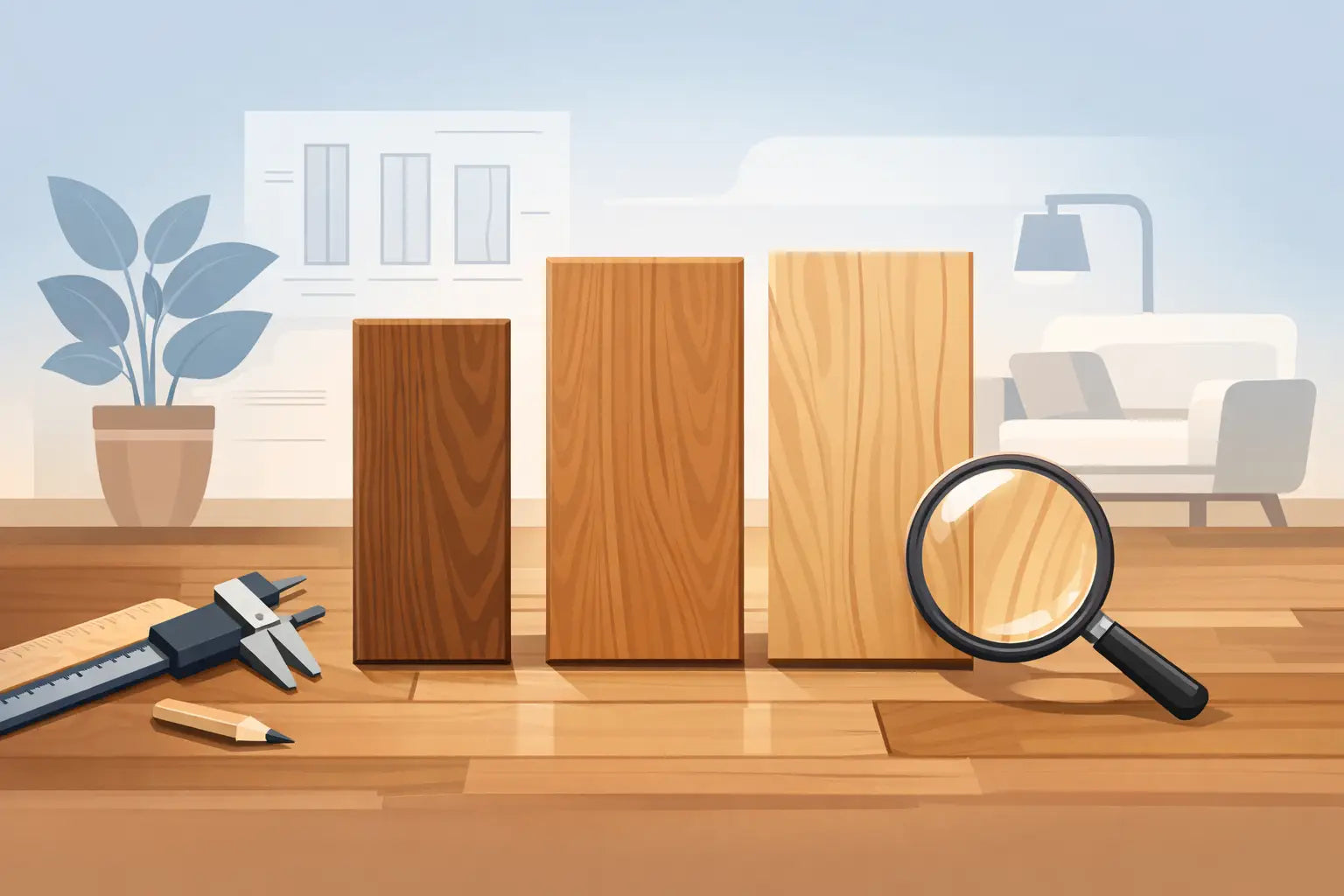
A 3-inch plank and a 7-inch plank can be the same wood species, the same color, and the same finish - but they will not make a room feel the same. That is why homeowners and project buyers keep asking how to choose hardwood plank width before they place an order. Width changes the look of the space, the pace of the pattern, and sometimes the total installed cost.
If you want the short version, wider planks usually create a more open, current look, while narrower planks feel more traditional and visually busy. But the right answer depends on your room size, your home style, your subfloor conditions, and how much variation you want to see across the floor.
How to choose hardwood plank width for your space
The easiest way to think about plank width is to match the floor to the scale of the room. In larger rooms, wider boards tend to look clean and proportional. They reduce the number of seams, which gives the floor a calmer, more expansive appearance. In open-concept layouts, that can be a big advantage.
In smaller rooms, narrow or mid-width planks can still work beautifully. They often suit bedrooms, offices, hallways, and older homes where a more classic look makes sense. That said, small rooms do not automatically require narrow boards. If you want a more updated feel, wider planks can actually help a compact room look less chopped up.
A practical starting point is this: narrow planks are often around 2 1/4 to 3 1/4 inches, mid-width planks usually fall around 4 to 5 inches, and wide planks are commonly 5 inches and up. Once you get into 7-inch and wider boards, the floor starts making a stronger design statement.
Start with the style of the home
If your goal is a timeless, traditional interior, narrower planks usually fit the brief. They have a familiar look that works well in colonial, craftsman, and many older resale homes. If you are updating a property for broad buyer appeal, mid-width planks are often the safest middle ground because they feel current without looking overly trend-driven.
If you want a premium, higher-end visual, wider planks tend to deliver that faster. They show off more of the wood grain in each board, which gives the floor a more custom look. This is one reason wide-plank hardwood is popular in renovated primary suites, open living areas, and upscale flips.
There is a trade-off, though. The wider the plank, the more prominent each board becomes. That means natural character marks, color shifts, and grain variation stand out more. For some buyers, that is exactly the appeal. For others, especially if they want a more uniform floor, a slightly narrower width can feel more controlled.
Wide planks feel simpler and bolder
Wider boards create fewer lines across the room, so the floor reads as broader and less busy. This works especially well with contemporary, transitional, and Scandinavian-inspired interiors. It can also make lower-traffic spaces feel more polished with less visual interruption.
Narrow planks feel classic and detailed
Narrow boards create more repetition, more seams, and a more textured visual pattern. That can bring charm to traditional homes and can help a space feel established rather than newly built. If you are matching existing hardwood in part of the home, narrow widths may also be the practical choice.
Room size matters, but not in a rigid way
A common rule says wide planks belong in large rooms and narrow planks belong in small rooms. That is directionally helpful, but it is not a hard rule. A small room with wide planks can look open and modern. A large room with narrow planks can look elegant and formal.
What matters more is proportion and intent. If the room is very narrow, such as a hallway, a wider plank can sometimes make the layout feel more balanced by reducing the number of visual breaks. In a compact bathroom or powder room, though, extra-wide hardwood may feel oversized compared to the scale of the space.
If you are buying for a full-home update, consistency matters too. Using one width throughout most of the house usually feels more cohesive than switching plank widths from room to room. For rental properties and resale-focused renovations, that kind of consistency also tends to make selection and installation simpler.
Think about wood movement and installation conditions
This is where looks meet reality. Wider hardwood planks can be more sensitive to changes in humidity because there is simply more board width to expand and contract across. That does not mean you should avoid wide planks. It means you need to make sure the product, subfloor, and installation method suit the space.
In many homes, especially across varying climates in the mainland US, engineered hardwood is a smart option when you want a wider plank look with more dimensional stability. Solid hardwood can also work well, but installation conditions matter more. Moisture testing, acclimation, and proper subfloor prep are not optional details.
If your home has seasonal humidity swings, or if you are installing below grade, over concrete, or in a remodel where conditions are less predictable, ask for expert guidance before choosing an extra-wide solid plank. Good pricing only pays off if the floor performs well after installation.
Width changes what you notice in the wood
Plank width does more than change scale. It changes what the eye picks up. A wide board shows more grain pattern, more mineral streaking, more knots, and more color variation inside each plank. If you are shopping for a character-rich white oak, hickory, or rustic-grade visual, wider planks can make that beauty stand out.
On the other hand, if you prefer a cleaner and more uniform appearance, mid-width planks often strike the best balance. You still get a modern presentation without making every natural variation the center of attention.
This is also where finish color matters. Darker stains on very wide planks can feel dramatic and upscale, but they may also show dust and surface wear more readily. Lighter tones on wide planks usually feel airy and current. Narrow planks in medium brown tones tend to read as classic and versatile.
Budget is not just about material price
When buyers compare widths, they often focus only on price per square foot. That matters, but it is not the whole story. Wider planks can sometimes cost more, especially in premium species or first-quality constructions, because producing wider, stable boards can be more demanding.
Installation can also shift the total cost. Depending on the product, wider planks may require more careful prep, adhesive assist, specific fastening methods, or tighter moisture controls. In some cases, though, fewer boards and fewer seams can help the job move efficiently.
The smarter question is not just which width is cheapest. It is which width gives you the best finished result for the money. For many shoppers, that means finding a first-quality hardwood at liquidation pricing rather than settling for a lower-grade floor in the name of savings.
How to choose hardwood plank width when resale matters
If you are renovating to sell, refinance, or improve rental appeal, the safest widths are usually in the middle to wide range. A 4-inch to 6-inch plank tends to satisfy the broadest range of buyers because it feels current without being too specific.
Very narrow strips can look dated in some homes unless the architecture clearly supports that style. Very wide planks can look premium, but if the rest of the home is modest or traditional, they may feel out of sync. For investment properties, broad appeal usually beats a highly personalized design move.
This is where visualizing the floor in the actual room helps. Seeing a plank width against your wall color, cabinet finish, and room dimensions can save you from buying based on a sample alone.
The best width is the one that fits the whole job
There is no universal best plank width, only the right fit for your layout, style, and budget. If you want a traditional look, narrower planks make sense. If you want a premium, updated feel, wider planks usually deliver more impact. If you want the safest all-around choice, mid-width boards are hard to beat.
The strongest flooring decisions come from balancing appearance with installation realities and long-term value. A great deal matters, but so does choosing a floor that looks right in the room and performs the way it should. When you compare widths with that mindset, you are far more likely to end up with hardwood that feels like an upgrade every time you walk in.