
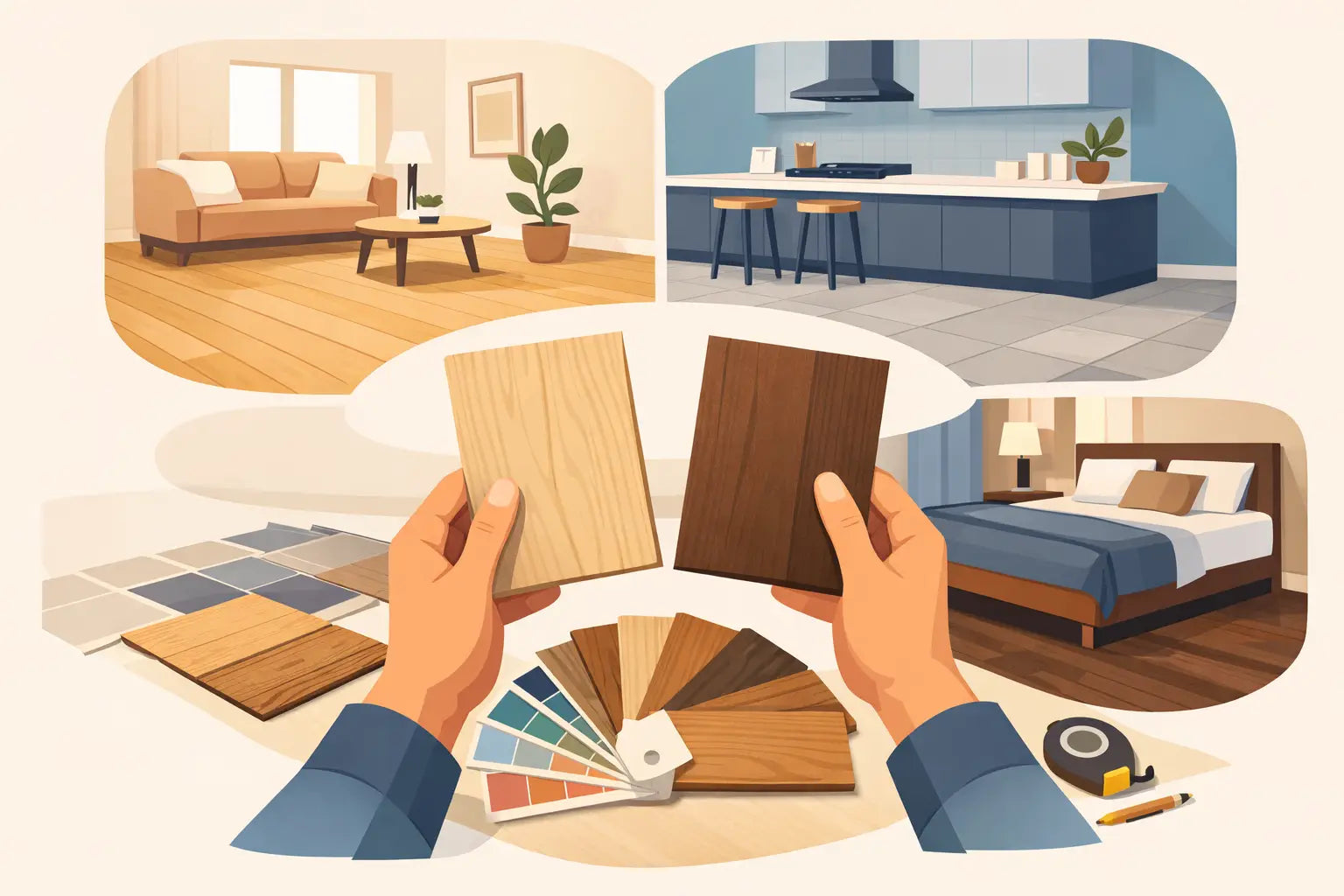
If you are figuring out how to match flooring rooms, the biggest mistake is assuming every space needs the exact same floor. Sometimes that creates the clean, open look buyers want. Other times, it makes a home feel flat, impractical, or more expensive than it needs to be. The right move is matching with purpose - balancing flow, durability, room function, and budget.
That matters whether you are updating one level, renovating a full house, or choosing flooring for a rental or flip. A smart flooring plan makes the home feel more finished. It can also help you avoid overpaying for premium material in rooms that do not need it, while still keeping the overall look consistent.
How to match flooring rooms without making the house feel chopped up
The goal is visual continuity, not strict uniformity. When flooring changes feel random, the house looks smaller and less polished. When the transitions make sense, the whole layout feels intentional.
Start by looking at connected sightlines. If you can stand in one spot and see the living room, kitchen, hallway, and dining area at once, those rooms usually benefit from a coordinated flooring strategy. In open layouts, matching or closely related floors help the space read as one larger area. That is especially valuable if you want a premium look without custom-design pricing.
In more segmented homes, you have more flexibility. Bedrooms can work with a different product than the main living areas, especially if the color family and style still connect. That might mean a wood-look luxury vinyl plank in the main spaces and a similar-tone laminate in bedrooms, or the same species look carried across different product constructions.
The key is that the switch should feel logical. A durable, water-resistant floor in moisture-prone areas and a warm, comfortable surface in private rooms is easier on the budget and still looks pulled together when tones and plank visuals complement each other.
Decide where consistency matters most
Think in zones instead of isolated rooms. Main living areas usually need the strongest continuity because they shape the first impression of the home. Hallways matter too because they connect everything. If your hallway floor clashes with adjoining rooms, the mismatch gets amplified.
Bedrooms are often where homeowners can save money without hurting the overall design. If they are off a central hallway and usually closed off from the main entertaining spaces, they do not always need to match perfectly. They do need to relate. Similar undertones, plank widths, and surface character go a long way.
Bathrooms, laundry rooms, and basements are their own category. Here, performance should lead the decision. Water resistance, wear layer, and ease of maintenance matter more than perfect material matching. The good news is that modern hard surface flooring makes it easier than ever to keep the visual style aligned even when the construction changes.
Match color first, then texture, then plank size
When people try to coordinate floors, they often focus on species names or product labels. That is not where the eye goes first. The eye notices color and undertone immediately.
Warm floors with yellow, golden, or reddish notes usually work best with other warm finishes nearby. Cool floors with gray or taupe undertones look better when the adjoining flooring stays in the same temperature range. Mixing warm and cool floors room to room is one of the fastest ways to make a home feel off, even if each individual floor looks good on its own.
After color, pay attention to texture and finish. A highly distressed, rustic plank next to a sleek, clean contemporary floor can feel like two different design plans collided. The same goes for gloss level. If one room has a matte, natural wood visual and the next has a shinier finish, the transition can look abrupt.
Plank size matters too, but usually after color and texture are aligned. Wide planks beside very narrow planks can look disconnected. If you are mixing products across rooms, keeping plank proportions reasonably close helps preserve flow.
Should every room have the same flooring?
Sometimes yes, but not always.
If you have an open-concept main floor, using the same flooring across the visible shared spaces often delivers the strongest result. It makes the home look larger, cleaner, and more expensive. It also reduces transition strips and visual stops, which is a practical win.
But a whole-house single-floor approach is not automatically the best value. Solid hardwood in every room may sound premium, yet it may not be the smartest use of money if you have kids, pets, moisture concerns, or investment-property goals. First-quality vinyl and laminate can give you the high-end look of wood with better performance in certain areas and at a far better price point.
That is where smart matching beats rigid matching. You do not need to force one product into every room. You need a plan that looks consistent and performs where it counts.
How to match flooring rooms by product type
Hardwood is a strong choice for living rooms, dining rooms, bedrooms, and other dry interior spaces where real wood adds long-term value and a premium finish. If you want hardwood in the main areas, you can often coordinate adjoining rooms with wood-look vinyl or laminate in a similar shade and grain style where added durability or savings make more sense.
Luxury vinyl works especially well when you want continuity through kitchens, entry areas, bathrooms, and lower levels. It handles moisture better and holds up well in busy households. For many homeowners, it is the easiest way to create a cohesive whole-home look without paying showroom pricing for every square foot.
Laminate is another smart option when you want strong visuals, scratch resistance, and budget control. In bedrooms, offices, and lower-traffic spaces, it can be a very practical way to maintain the design direction of the rest of the home while keeping costs in check.
The best result often comes from choosing one visual direction and applying it across the right products. Think white oak look, medium brown oak look, or clean matte walnut tone, then match rooms using the best-performing material for each space.
Use transitions strategically, not as a fix for bad planning
A transition strip should connect two flooring areas cleanly. It should not rescue a color mismatch that never should have happened.
Doorways are the easiest place to change flooring because the eye expects a break there. That makes them ideal for switching product types when needed. Large open pass-throughs are trickier. In those areas, a mismatch becomes more obvious, so staying with one floor or a very close visual match usually works best.
Direction also matters. Running planks in the same direction through connected areas improves flow. Changing direction from room to room can make the layout feel fragmented unless there is a clear architectural reason to do it.
Sample in real light before you commit
Online shopping makes comparing premium flooring at liquidation prices a lot easier, but samples still matter. A floor that looks warm beige on a screen may read gray in your home. Lighting, wall color, cabinetry, and even ceiling height can shift how flooring appears.
That is why visual planning tools help, especially when you are trying to coordinate several rooms at once. A room visualizer can narrow the field fast, but you still want to compare tones in your actual space before making a final decision. That extra step can save you from ordering a floor that technically matches on paper but misses in real life.
The budget-smart way to get a matched look
If cost is part of the equation, and for most buyers it is, focus your premium spend where it shows most. Main living spaces, high-visibility hallways, and areas that shape first impressions deserve the strongest flooring investment. Secondary rooms can often use a more affordable but visually coordinated option.
This is where deal-driven shopping can work in your favor. You do not have to settle for lower-grade material to stay on budget. You can often get first-quality hardwood, vinyl, or laminate at aggressive pricing if you shop with a clear whole-home plan instead of choosing room by room on impulse.
Factory Flooring Liquidators serves exactly that type of buyer - homeowners and project shoppers who want premium visuals, expert support, and real value without showroom markups. When you start with the right color family, understand your room zones, and choose materials based on performance, matching flooring becomes a practical decision instead of a guessing game.
The best flooring plan is the one that makes your home feel connected, works for how you live, and still leaves room in the budget for the rest of the project.