
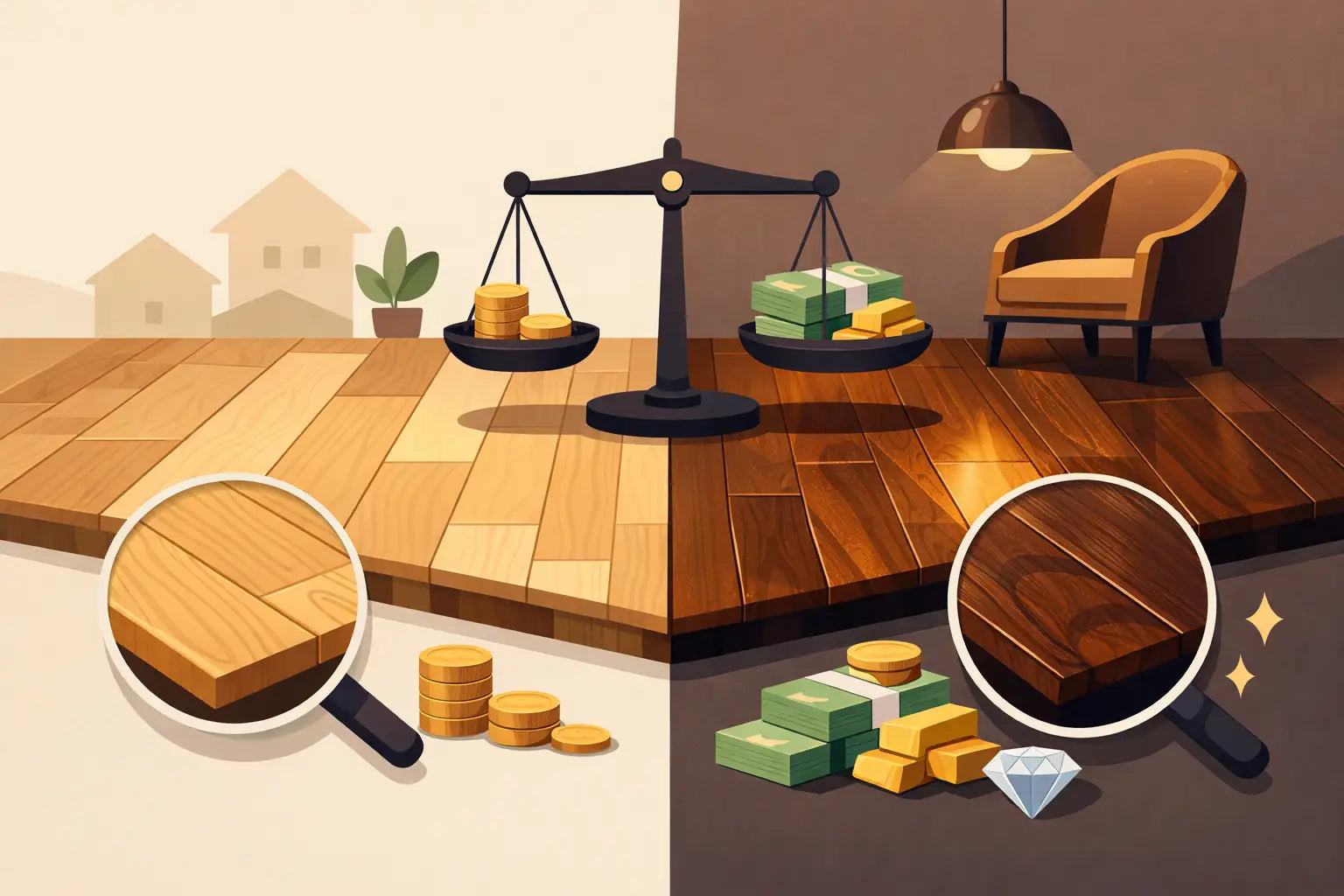
A $3.99-per-square-foot hardwood floor and an $8.99 option can look surprisingly similar in a small online image. That gap is exactly why some hardwood floors cost double the price of others. The difference is rarely just a brand name on the box. It is usually tied to the species, wood grade, construction, usable thickness, finish system, board dimensions, and the level of quality control behind the product.
For a homeowner updating one room, that price difference may feel easy to dismiss. For a contractor, investor, or whole-home remodel, it can change the material budget by thousands. The smart move is not automatically buying the lowest or highest price. It is identifying which features will matter in the space you are flooring and paying for quality where it counts.
The Hardwood Species Sets the Starting Price
Not all wood has the same cost before it ever reaches a flooring mill. Domestic red oak and white oak are popular because they are readily available, durable, and versatile. Maple, hickory, walnut, and specialty domestic species can cost more based on supply, milling difficulty, grain character, and demand.
Imported and exotic species may carry a higher price because of sourcing, transportation, and limited availability. That does not automatically make them a better choice for every project. A high-quality white oak floor can outperform a poorly made exotic floor, while delivering a timeless look that works across resale markets.
Species also affects daily performance. Hickory is exceptionally hard and handles active households well, but its dramatic grain can create more natural variation from board to board. Maple has a cleaner, tighter look, although it can be less forgiving when refinishing or staining. The right species should fit the room, your preferred look, and the amount of traffic it will take.
Why Some Hardwood Floors Cost Double: Solid vs. Engineered Construction
Construction is one of the biggest reasons similar-looking floors land in very different price brackets. Solid hardwood is milled from a single piece of wood. It is a proven, long-lasting choice for above-grade rooms and can typically be sanded and refinished multiple times over its life.
Engineered hardwood has a real hardwood top layer bonded to a stable core. Quality engineered flooring is not a lesser category. In fact, it can be the better choice for many homes because its layered construction helps it resist movement caused by changing humidity. That makes it particularly practical for wide planks, slab foundations, basements where approved, and many Texas-area homes with major seasonal climate swings.
The crucial detail is the wear layer. A budget engineered floor may have a thin veneer that is designed for one light refresh, if any. A premium engineered floor may have a thick hardwood wear layer that can be refinished and delivers a more substantial feel underfoot. Two engineered products can both be called "white oak," yet one may be built for a short cosmetic update while the other is made for decades of ownership.
The Core Matters More Than Most Shoppers Realize
Look beyond the surface photo. Better engineered hardwood often uses a multi-ply plywood core, which provides strength, stability, and reliable fastening. Lower-priced products may use thinner material or less stable composite-style cores. There are good products at many price points, but core quality is not the place to make assumptions.
A well-built core helps planks stay flatter, lock together properly, and perform more consistently through normal indoor temperature and humidity changes. It can also affect whether the floor is approved for nail-down, glue-down, floating, or radiant-heat applications. Installation flexibility has real value when a project presents site-specific challenges.
Wood Grade Changes the Look and Yield
Hardwood grade describes the natural visual character selected from the lumber. Clear or select-grade floors have fewer knots, mineral streaks, color shifts, and short boards. Because mills must sort out more boards to create that uniform appearance, the cost rises.
Character, rustic, or common-grade floors embrace knots, grain variation, filled checks, and color movement. These floors can offer excellent value, especially when the goal is a warm, authentic, less formal interior. They are not automatically lower quality. They simply use more of the tree and present a more varied visual story.
A cleaner, more consistent floor costs more because it requires more select material and produces more waste during sorting. If you love character-grade white oak, paying a premium for a near-knot-free select floor makes little sense. If your design calls for a calm, uniform finish across an open-concept home, the upgrade may be worth it.
Wider, Longer Planks Cost More to Produce
Wide-plank hardwood has a high-end presence that narrow strip flooring cannot fully replicate. It also requires larger, clearer sections of lumber. Those boards are less abundant, and manufacturers must carefully dry, mill, and inspect them to help prevent warping or excessive movement.
Longer average board lengths can also push price higher. A carton with many long boards creates a more continuous, less busy installation. Shorter boards are not defective, but they create more end joints and may require more planning during layout. This is one reason two floors with the same species, color, and thickness can have very different installed appearances.
Board size comes with a trade-off. Wider planks demand proper acclimation, subfloor preparation, and humidity control. They can look exceptional, but they are less forgiving of poor installation conditions. Paying more for wide planks only makes sense when the job site and installation plan support them.
Finish Quality Protects Your Investment
The finish is the working surface of the floor. It determines how well the floor handles everyday scuffs, cleaning, sunlight, and household traffic. Premium hardwood often uses more advanced factory-applied finish systems, including multiple coats of urethane, aluminum oxide, ceramic additives, or specialized UV-cured coatings.
A stronger finish can add meaningful cost, but it can reduce maintenance and preserve the floor's appearance longer. This matters in entryways, kitchens, family rooms, rentals, and homes with pets. It does not mean a floor becomes scratch-proof. No real hardwood finish is immune to grit, claws, dragged furniture, or standing water.
Color consistency and stain quality matter too. A carefully finished floor tends to have more even tone from plank to plank and cleaner edges. Hand-scraped, wire-brushed, smoked, reactive, and layered-color treatments may cost more because they require additional production steps. These details can create a premium look, but they should suit your design rather than simply inflate the budget.
Milling Precision and Quality Control Are Not Cosmetic Details
Flooring is easier to sell from a sample than it is to install across 1,500 square feet. Higher-priced hardwood may reflect tighter milling tolerances, better matching systems, straighter boards, more consistent dimensions, and stricter quality inspections.
That precision can reduce wasted material, simplify installation, and produce cleaner seams. Less expensive flooring may still be a strong purchase, especially at liquidation pricing, but buyers should understand what they are comparing. A low price on first-quality inventory is different from a low price caused by seconds, defects, unclear grading, or limited product support.
Review the product specifications, recommended installation method, carton coverage, and warranty terms before comparing square-foot prices. A floor with a slightly higher material cost but lower waste and fewer installation headaches can be the better project value.
Brand, Distribution, and Markup Can Distort the Price
Some price differences are product-driven. Others are retail-driven. Traditional showrooms may build designer overhead, sales commissions, local warehousing, and multiple distribution layers into the selling price. Big-box stores may offer convenience but carry a narrower selection of premium constructions and plank formats.
This is where liquidation pricing can change the equation. Premium, first-quality hardwood does not need a premium showroom markup to be a smart purchase. Factory Flooring Liquidators gives project buyers access to high-value hard surface flooring at aggressive pricing, with expert support and nationwide delivery across the mainland United States.
A liquidation deal still deserves the same practical questions: Is it first quality? Is enough inventory available for the entire job plus an appropriate overage? What is the construction, wear layer, grade, and warranty? A transparent answer to those questions is more valuable than a dramatic discount label alone.
Buy for the Room, Not Just the Price Tag
The best hardwood floor is the one that fits how the room will be used. A durable, stable engineered floor with a strong finish may be the smarter investment for a busy family room. Solid hardwood may be the right long-term choice for an above-grade renovation where future refinishing is a priority. A character-grade floor may deliver the most visual impact per dollar in a rental refresh, flip, or farmhouse-style remodel.
Before ordering, view the floor in a room setting, not just as a small swatch. Check samples in your home's natural and artificial light, and account for trim, wall color, cabinets, and adjoining floors. A room visualizer can help narrow the field before you commit.
The goal is not to pay double just because a floor is labeled premium. It is to recognize when a higher price buys thicker real wood, better construction, a longer-lasting finish, cleaner milling, or a look that will keep paying off every time you walk into the room.