
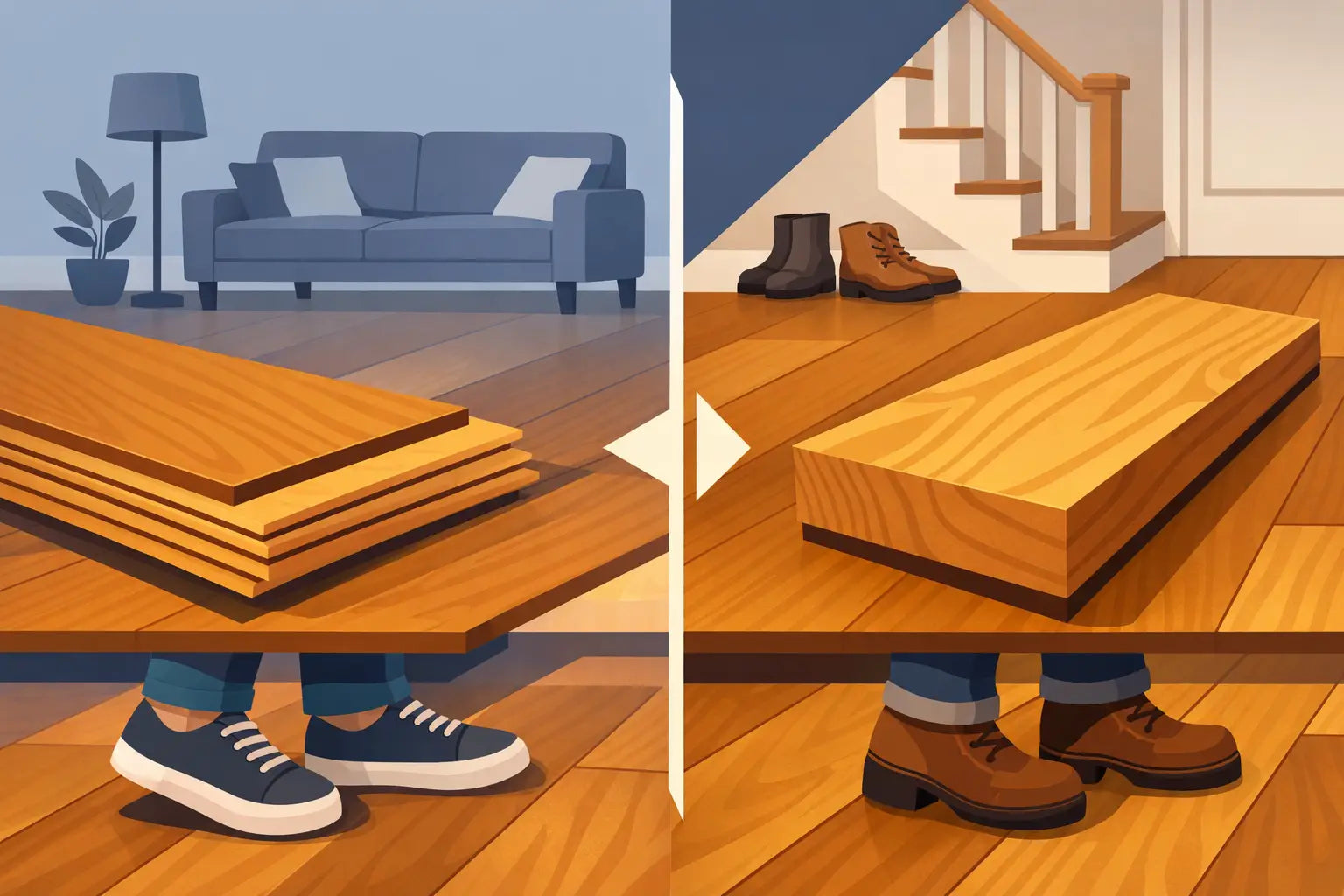
A busy home does not need a floor that looks worn out after one soccer season, two large dogs, and a few holiday gatherings. When comparing engineered hardwood vs solid hardwood flooring for high traffic homes, the best choice is not simply the one with the hardest name or highest price. It is the floor that matches your traffic pattern, subfloor, maintenance expectations, and long-term plans.
Both options can deliver the warm, premium character buyers want from real wood flooring. The difference is how each product is built - and how that construction performs when daily life gets demanding.
Engineered Hardwood vs Solid Hardwood Flooring for High-Traffic Homes
Solid hardwood is made from one continuous piece of wood. Engineered hardwood has a real hardwood top layer, called a wear layer, bonded to a multi-layer core. Both are genuine wood flooring, but their construction creates different strengths.
For a main living area, entryway, or busy hallway, the finish and wood species matter just as much as the flooring category. A durable engineered floor with a thick wear layer and quality finish can outperform a softer solid hardwood floor in a high-use space. On the other hand, a thick solid oak floor can be sanded and refinished several times, giving it a major advantage for homeowners planning to stay put for decades.
The right answer depends on whether you need maximum stability now, maximum refinishing potential later, or the strongest possible value at purchase.
The Case for Engineered Hardwood
Engineered hardwood is often the practical winner in active homes because its layered core is designed to resist the natural expansion and contraction that comes with changes in humidity. That stability makes it especially appealing for open-plan homes, rooms over concrete slabs, below-grade spaces, and areas where indoor humidity is not always perfectly controlled.
For high traffic, look beyond the word “engineered.” The key detail is the wear layer. Better engineered hardwood has a thicker real-wood veneer, which gives the floor more visual depth and, in many cases, allows for future refinishing. A very thin veneer may be a smart short-term budget choice, but it offers less room for repair if the floor takes serious abuse.
Engineered hardwood also gives shoppers more installation flexibility. Depending on the product, it may be glued down, nailed down, or floated. That can reduce installation challenges and costs in certain spaces, particularly when a home does not have a traditional plywood subfloor.
For rental properties, family rooms, remodeled basements, and busy first-floor living spaces, this combination of real-wood style and dimensional stability is hard to beat. It is also often available in wide-plank looks that make rooms feel larger and more current without forcing you into designer showroom pricing.
Where Engineered Hardwood Has Limits
Not every engineered product is built for the same level of traffic. Entry-level floors with thin wear layers, soft species, or low-grade finishes can show scratches and dents sooner than expected. That is why a deal should be evaluated on construction details, not just a low per-square-foot number.
Engineered wood is more moisture-resistant than solid wood, but it is not waterproof. Standing water, repeated wet shoe traffic, and pet accidents that sit too long can still damage the wood surface. For mudrooms, laundry rooms, or homes with frequent spills, a premium waterproof vinyl floor may be the better-performing choice.
Why Solid Hardwood Still Earns Its Reputation
Solid hardwood remains the classic choice for buyers who want a floor with long-term repair potential. Because the material is solid wood from top to bottom, it can usually be sanded and refinished multiple times. Scratches, fading, and moderate surface wear do not have to mean replacement.
That makes solid hardwood particularly compelling in high-traffic homes where the owners expect to keep the floor for many years. A well-maintained solid oak or hickory floor can be refreshed after years of use and still retain its value and character. It is a strong choice for bedrooms, living rooms, dining rooms, and above-grade spaces with stable indoor conditions.
Solid hardwood also develops a natural patina over time. For some homeowners, the small marks of a lived-in home are not defects. They are part of the appeal. If you want a floor that can age gracefully and be renewed instead of discarded, solid hardwood has a real advantage.
Where Solid Hardwood Requires More Planning
Solid wood reacts more noticeably to humidity changes. In dry conditions, it can shrink and create small gaps. In humid conditions, it can expand. Proper acclimation, correct installation, and a reasonably stable indoor environment are essential.
It is generally not the first recommendation for below-grade basements or installations directly over concrete. It may also be less forgiving in homes where exterior doors stay open often, wet boots are common, or humidity control is inconsistent.
Solid hardwood can cost more to install, especially if the project needs subfloor preparation or nail-down installation. That does not make it a poor value. It simply means the total project budget should include more than the material price.
Traffic Is More Than Footsteps
“High traffic” means different things in different homes. A retired couple with frequent guests creates a different kind of wear than a family with three kids, a Great Dane, and an entry door that leads straight to the backyard.
Foot traffic creates surface abrasion from grit and debris. Pets can create scratches, especially with softer wood species. Dropped toys, kitchen chairs, and moving furniture cause dents. Sunlight can gradually change wood color. Moisture creates its own category of risk.
For either engineered or solid hardwood, choose a harder species when durability is the priority. Oak is a proven all-around choice, while hickory is harder and better suited to homes where dents are a concern. Matte and low-gloss finishes also do a better job of disguising minor scratches than high-gloss finishes. Wire-brushed, hand-scraped, and character-grade looks can be especially forgiving because normal wear blends into the natural texture.
Wide planks are popular, but they need careful installation and appropriate humidity conditions. A quality product, proper installation, and a stable home environment matter more than chasing a particular plank width.
Which Floor Delivers Better Value?
The better value is the option that avoids an expensive mismatch. Buying solid hardwood for a moisture-prone concrete-slab room because it was on sale can create a costly problem. Buying a bargain engineered floor with a minimal wear layer for a busy forever home can also lead to regret.
Engineered hardwood often delivers the strongest upfront value when you need real wood over concrete, need installation flexibility, or want a premium look at a more accessible project cost. It is a smart fit for renovations, investment properties, and homeowners who want a first-quality finish without paying traditional retail markups.
Solid hardwood can deliver outstanding lifetime value in the right setting. If the room is above grade, humidity is controlled, and refinishing is part of your long-range plan, its repairability can justify the added initial cost.
At Factory Flooring Liquidators, the goal is not to push one construction type over the other. It is to help shoppers find premium, first-quality flooring at liquidation pricing that actually fits the job - including the subfloor, traffic level, and budget behind it.
Make the Decision Room by Room
Choose engineered hardwood when you need better dimensional stability, are installing over concrete, want wide-plank options, or need a real-wood floor for a high-use area with variable conditions. Prioritize a substantial wear layer, a durable finish, and a species that can handle your household.
Choose solid hardwood when your installation area is above grade, your home maintains stable humidity, and you want the ability to refinish the floor several times over its lifetime. It is an especially strong investment for classic interiors and long-term ownership.
Before placing an order, measure carefully, account for waste, and think honestly about the room’s daily use. Use a room visualizer to compare colors and plank styles before committing, then confirm the product’s wear layer, installation method, and recommended applications with flooring support. The best hardwood floor for a busy home is the one you will still be glad you chose after the first muddy day, the first party, and the first decade of real life.