
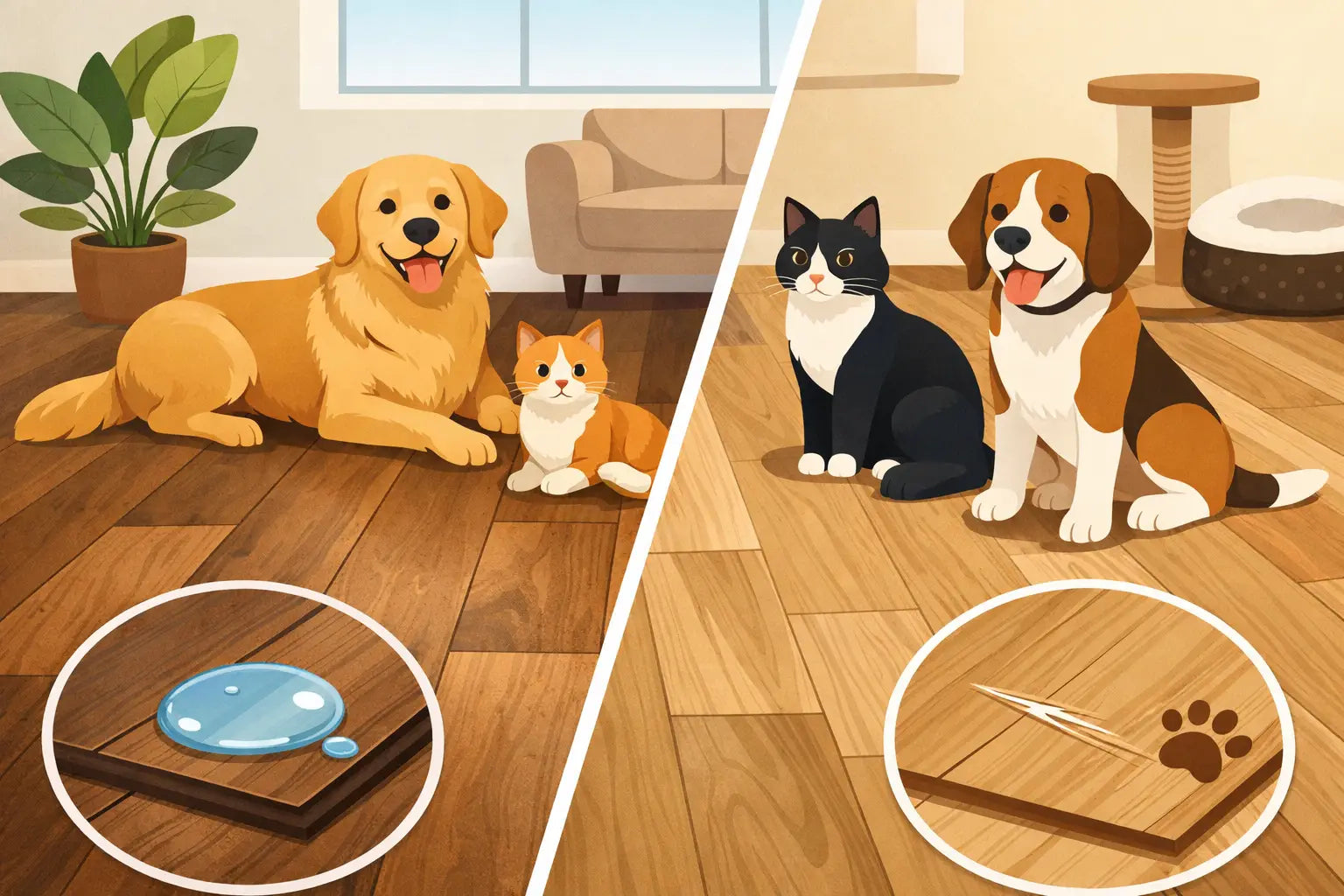
A wet paw print at the back door is normal. A tipped water bowl, an accident while you are away, and a dog racing across the living room at full speed are normal too. When comparing luxury vinyl plank vs laminate flooring for families with pets, the better choice comes down to how your household actually lives, not just which sample looks best under showroom lighting.
Both options can deliver the look of hardwood at a far more accessible price than traditional wood flooring. Both are also available in convincing colors, textures, and plank sizes. But pets expose the practical differences quickly: moisture tolerance, scratch resistance, traction, cleanup, and how well the floor holds up after years of daily use.
Luxury Vinyl Plank vs Laminate Flooring for Families With Pets
For most active pet households, luxury vinyl plank, often called LVP, is the safer all-around pick. Its waterproof construction and softer feel make it especially well suited to kitchens, living rooms, entryways, and homes where spills are part of the daily routine.
Laminate remains a strong value option for the right home. It is often highly scratch resistant, can provide a crisp wood look, and may cost less depending on the product. The key is choosing it with realistic expectations around moisture. A high-quality laminate can handle normal pet life well, but standing water and repeated accidents need fast attention.
The practical difference is simple: LVP is generally more forgiving when life gets messy. Laminate can be tougher against surface wear, but it has less room for error around water.
How Each Floor Handles Paw Scratches
Dogs do not need to be large to leave their mark. Grit carried in from outside and claws skidding around corners can be harder on a floor than the pet itself.
Laminate often wins on surface hardness
Quality laminate flooring uses a hard wear layer that can be exceptionally resistant to scratches, scuffs, and dents from everyday traffic. For homes with large dogs that run, play, and pivot indoors, a premium AC-rated laminate can be an excellent contender. It is also a practical choice for rentals or investment properties where durable, attractive flooring matters and the budget needs to stay disciplined.
That said, scratch resistance is not the same as damage-proof. Deep gouges can still occur, and unlike a solid hardwood floor, laminate is not designed to be sanded and refinished. A matte or textured finish does a better job of disguising light wear than a smooth, glossy floor.
LVP is durable, but wear layer matters
Luxury vinyl plank has a resilient vinyl surface that stands up well to normal claw traffic. The deciding factor is the wear layer. A thicker wear layer provides better protection against scratches, stains, and everyday scuffing, especially in busy rooms.
For pet owners, it pays to avoid making a decision based on plank price alone. First-quality LVP with a stronger wear layer is the smarter long-term buy than a thin, bargain-grade option that needs replacement sooner. Look for realistic embossing and a low-sheen finish as well. They help hide small marks while giving the floor a more believable wood appearance.
Spills, Accidents, and Water Bowls Change the Equation
This is where LVP pulls ahead for many families.
Luxury vinyl plank is waterproof, meaning the plank itself will not swell from a pet accident, a spilled bowl, or wet shoes by the door. You should still wipe up liquids promptly to keep the surface clean and protect seams, subflooring, and surrounding trim, but a brief delay is far less likely to become a flooring disaster.
Laminate flooring is typically water-resistant, not automatically waterproof. Many newer products feature improved locking systems and moisture protection, making them much better than older laminate floors. Still, liquid that works into seams or sits along an edge can cause swelling, peaking, or irreversible board damage. This does not make laminate a bad choice for pet owners. It simply makes it a better fit for dry areas, carefully managed water bowls, and households prepared to clean up accidents quickly.
If your dog frequently comes in wet from the yard, your cat occasionally misses the litter box, or your home has young pets still being trained, LVP offers meaningful peace of mind.
Comfort, Noise, and Traction Matter More Than Buyers Expect
A floor can be durable and still be wrong for your pet. Older dogs, small dogs, and pets with joint issues can struggle on overly slick surfaces. The same applies to families tired of hearing every click of nails across the room.
LVP has a slight advantage in comfort because its construction is more resilient underfoot. It tends to feel warmer and quieter than laminate, particularly when paired with the proper underlayment. Many LVP styles also have textured surfaces that improve grip without looking overly rustic.
Laminate is harder underfoot and can create more noise from nails and foot traffic. A good underlayment can reduce sound, but it will not fully change the inherent feel of the material. Textured laminate is worth considering if traction is a concern, while high-gloss finishes are usually less forgiving with pet hair, paw prints, and slips.
Neither floor replaces area rugs in a pet-friendly home. Place washable rugs at exterior doors, beneath feeding stations, and in favorite resting areas to limit grit, moisture, and wear where it happens most.
Cleaning Is Easy, but the Rules Are Different
Both LVP and laminate are simpler to maintain than carpeting, especially when shedding season hits. Regular sweeping or vacuuming with a hard-floor setting removes abrasive dirt before it can grind into the finish.
For LVP, use a damp microfiber mop and a cleaner approved for vinyl flooring. Avoid steam mops, abrasive scrubbers, waxes, and harsh chemicals. The goal is clean, not soaked.
For laminate, be even more conservative with water. Use a lightly damp, well-wrung mop and dry any remaining moisture quickly. Never flood the floor or let water collect at the edges. This is one reason laminate can be ideal for a pet-friendly bedroom or living room but less practical in a mudroom that sees wet paws every day.
Cost: Buy for the Life of the Floor, Not Just the Checkout Total
Laminate may offer a lower upfront price in some collections, and its scratch-resistant surface can make it a high-value option. LVP pricing varies widely based on thickness, wear layer, visuals, attached pad, and construction. Premium LVP can cost more than entry-level laminate, but its waterproof performance often justifies the investment in high-risk rooms.
Installation also affects the real cost. Both products are available in click-lock floating systems that can be efficient for qualified DIY installers or professional crews. Existing floor conditions, moisture testing, leveling, transitions, and baseboard work all influence the finished result. A cheaper product installed over an uneven subfloor is rarely a bargain.
At Factory Flooring Liquidators, homeowners and project buyers can shop premium first-quality vinyl and laminate at liquidation pricing, making it easier to choose the performance level the room needs without paying traditional showroom markups. Use a room visualizer before ordering to compare colors with your furniture, pet hair, natural light, and wall tones. That last detail matters more than most buyers think.
Which Flooring Should Pet Owners Choose?
Choose luxury vinyl plank if waterproof protection, quieter walking, and easy cleanup rank highest on your list. It is the practical favorite for homes with puppies, multiple pets, messy entryways, water bowls, or frequent indoor-outdoor traffic. It is also a smart whole-home option when you want consistent flooring through kitchens, halls, and living spaces.
Choose laminate if scratch resistance and upfront value are your top priorities, and your pets are generally house-trained with limited exposure to standing water. A premium textured laminate can perform exceptionally well in bedrooms, offices, and dry living areas while delivering a polished wood look.
For many homes, the strongest answer is not one material everywhere. Use LVP in moisture-prone, high-traffic spaces and consider quality laminate in drier rooms where its hard surface and value shine. Pick the floor that fits the messiest, busiest version of your normal day, then enjoy the fact that premium performance does not have to come with a premium showroom price.