
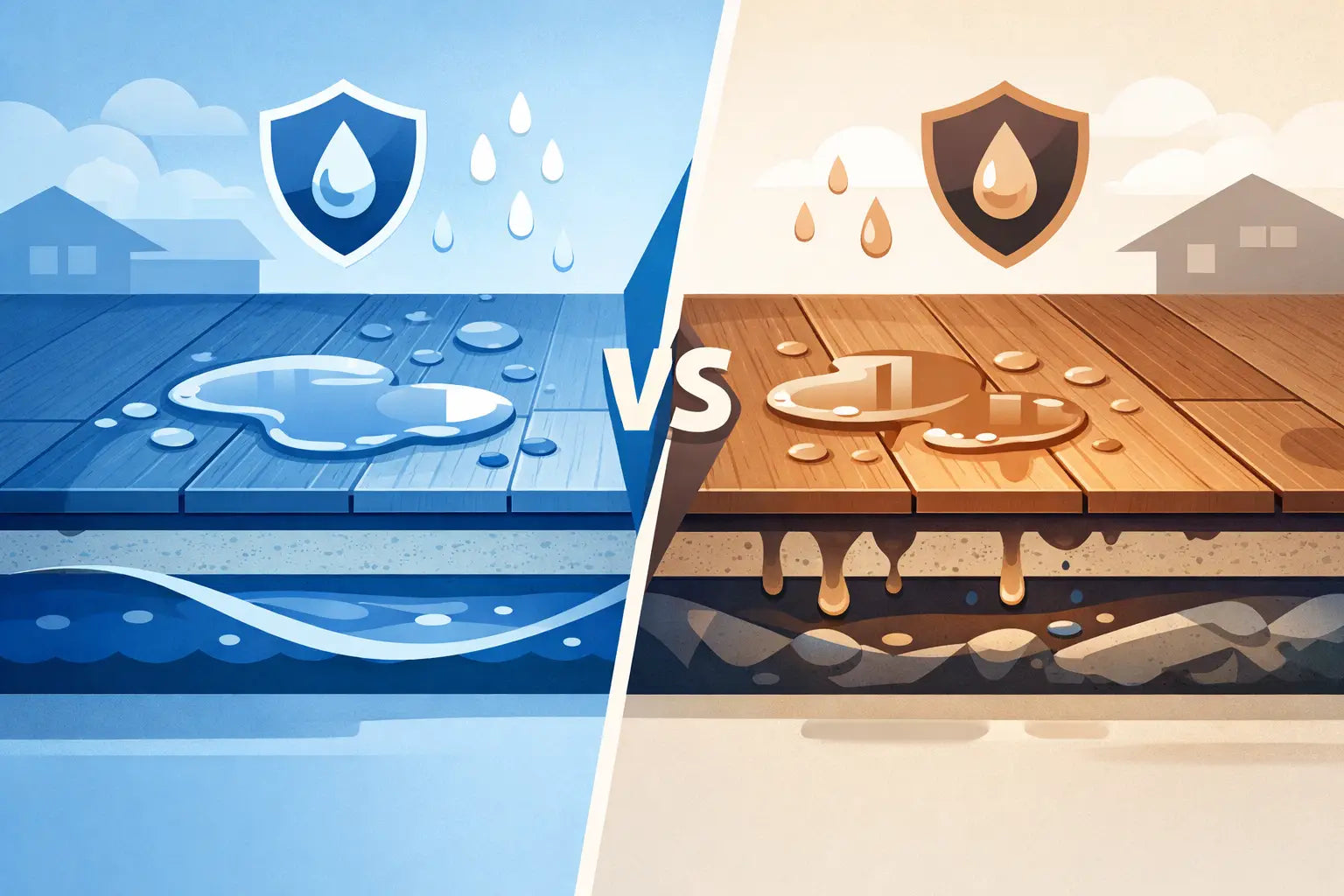
A wet dog shaking off at the back door, a dishwasher leak behind the cabinets, a kid missing the bath mat - these are the moments that test a floor’s water claim. Waterproof flooring vs water resistant flooring explained comes down to one practical question: can the floor stop water from damaging its core and structure, or can it only tolerate moisture for a limited time?
The labels sound similar, but the difference can affect your budget, installation plan, and how long your new floor looks like a premium upgrade. For kitchens, bathrooms, basements, rentals, and busy family spaces, choosing the right level of protection matters as much as choosing the right color.
Waterproof Flooring vs Water Resistant Flooring: The Real Difference
Waterproof flooring is designed so water will not penetrate and damage the flooring material itself under normal household conditions. A spill can sit on the surface without causing the plank to swell, warp, or delaminate. That does not mean water cannot find its way through seams, around room edges, or beneath the floor, especially after a major leak or flooding event. It means the flooring product is built to withstand everyday water exposure far better than traditional wood-based options.
Water-resistant flooring repels water at the surface and gives you time to clean up a spill, but it is not intended for prolonged standing water or repeated saturation. Its protection often comes from a sealed wear layer, treated edges, tight locking system, or moisture-resistant core. If water reaches an untreated seam or sits too long, the core can absorb it and become damaged.
Think of water resistance as a grace period. Think of waterproof construction as stronger material-level protection. Neither is a license to ignore leaks, but one gives homeowners much more margin for error.
Which Flooring Types Are Actually Waterproof?
Luxury vinyl flooring is the most common waterproof choice for residential projects. Luxury vinyl plank and luxury vinyl tile typically use a vinyl, rigid core, or composite construction that does not absorb water like wood. This makes vinyl a strong fit for kitchens, bathrooms, laundry rooms, entryways, basements, and rental properties where durability and easy cleanup carry real value.
Not every vinyl floor is built the same way. Product thickness, wear-layer quality, core type, locking system, and underlayment all affect how the floor performs over time. A first-quality waterproof vinyl product can deliver the look of hardwood or stone while handling the daily messes that would put natural wood at risk.
Tile is also waterproof at the surface, though grout and installation details still need attention. Ceramic and porcelain tile can be an excellent wet-area option, but it may cost more to install and can feel harder or colder underfoot than vinyl.
Some laminate products are marketed as waterproof. Read those specifications carefully. Many waterproof laminates offer impressive spill protection, but the warranty may depend on cleaning up water within a stated timeframe and following exact installation requirements. The product’s core, seam treatment, and edge design determine whether its waterproof claim is the right one for your room.
What Makes a Floor Water Resistant?
Water-resistant flooring often includes laminate, engineered hardwood, and certain hardwood products with durable factory finishes. These floors can handle normal spills when they are wiped up promptly. They are a smart choice for living rooms, bedrooms, hallways, and dining areas where the appearance and feel of wood matter but constant water exposure is unlikely.
Water-resistant laminate has come a long way. Better locking systems and protected edges help prevent a quick spill from reaching the core. Still, laminate commonly uses a fiberboard-based core. If water gets beneath the planks or remains at a joint for too long, swelling can occur. Once a laminate edge swells, it generally cannot be repaired by drying it out.
Engineered hardwood is more dimensionally stable than solid hardwood because of its layered construction, but it is not waterproof. The top layer is real wood, and the product can react to prolonged moisture. It belongs in spaces where you want authentic hardwood character and can reasonably control spills and humidity.
Solid hardwood requires the most caution around water. It can be refinished and can last for generations in the right setting, but kitchens with frequent spills, below-grade basements, and full bathrooms are not its strongest applications.
Standing Water Is Where the Difference Shows Up
A glass of water that is wiped up in five minutes is rarely a major test for a quality water-resistant floor. A slow refrigerator line leak, an overflowing toilet, or water tracked in during a storm is a different situation. Water can travel under baseboards, through expansion gaps, and beneath planks before you even see it.
With waterproof vinyl, the planks themselves are unlikely to swell from that exposure. However, moisture trapped beneath the flooring can still create odor, mold concerns, subfloor damage, or adhesive failure depending on the installation. Waterproof refers to the floor covering, not necessarily the full room assembly.
With water-resistant laminate or wood flooring, standing water creates a much higher risk of visible damage. Plank edges may raise, joints can separate, and the floor may need partial or complete replacement. That is why the room’s real-life use should lead the decision, not just the word on the product label.
Choose Based on the Room, Not the Marketing Claim
For bathrooms, laundry rooms, mudrooms, below-grade basements, and homes with active pets or young children, waterproof vinyl is usually the practical value choice. It delivers substantial protection without asking you to treat every spill like an emergency. It also gives remodelers and property investors a durable, attractive surface that is easier to maintain between tenants or projects.
Kitchens sit in the middle. A water-resistant laminate or engineered hardwood can work well in a carefully maintained kitchen, especially when you want a more traditional wood appearance. But if your kitchen is the center of family life, opens to an exterior door, or has a history of appliance leaks, waterproof flooring is the safer bet.
Living rooms, bedrooms, offices, and low-moisture hallways are more flexible. Here, water resistance may be all you need, allowing you to prioritize the grain pattern, texture, plank width, and price point you prefer. A premium water-resistant laminate can offer a convincing hardwood look at a strong value, while engineered hardwood provides real-wood appeal for buyers who want it.
Do Not Confuse Waterproof With Indestructible
A waterproof floor can still scratch, dent, fade, or fail if it is installed over an unsuitable subfloor. Heavy furniture, rolling appliances, pet claws, and direct sun affect flooring differently than water does. A waterproof claim also does not automatically mean the product is suitable for every commercial environment, every temperature swing, or every installation method.
Before buying, check the manufacturer’s specifications for wear-layer thickness, residential or commercial warranty coverage, approved underlayment, moisture testing requirements, and installation location. If you are installing over concrete, ask specifically about vapor barriers and subfloor moisture. A waterproof plank installed over a damp slab without the right preparation may still lead to problems below the surface.
This is also where a lower sticker price can become expensive. A product that does not match the room may need replacement long before a properly selected first-quality floor. The best deal is not simply the cheapest box. It is the flooring that gives you the look, performance, and expected service life your project needs.
How to Compare Products Before You Buy
Start by identifying the water risk in the room. Consider everyday spills, appliance connections, exterior doors, pets, children, below-grade conditions, and whether the space is part of a rental or renovation project. Then compare the actual product details instead of relying on one bold word printed on a display.
Ask how long spills can remain on the floor under the warranty. Ask whether the core is wood-based, vinyl-based, or mineral-based. Confirm whether the warranty covers surface water only or also protects against water entering the seams. Finally, make sure the floor’s installation instructions match your subfloor and room conditions.
A room visualizer can help you narrow down the color and style, but performance should make the final cut. That is especially true when you are buying enough flooring for a whole-home update, a flip, or multiple rental units. Getting the category right first keeps you from paying twice later.
The Better Value Is the Floor That Fits Your Life
Water-resistant flooring can be a smart, cost-effective choice in dry spaces where you want the warmth of wood visuals and reliable spill protection. Waterproof flooring earns its place where water is part of normal life, not an occasional accident. The right answer depends on the room, your household, and how much risk you are willing to manage.
At Factory Flooring Liquidators, the goal is simple: help you buy premium, first-quality flooring at liquidation pricing without guessing at what a product can handle. Choose the protection your room truly needs, then choose the finish that makes the space feel finished.