
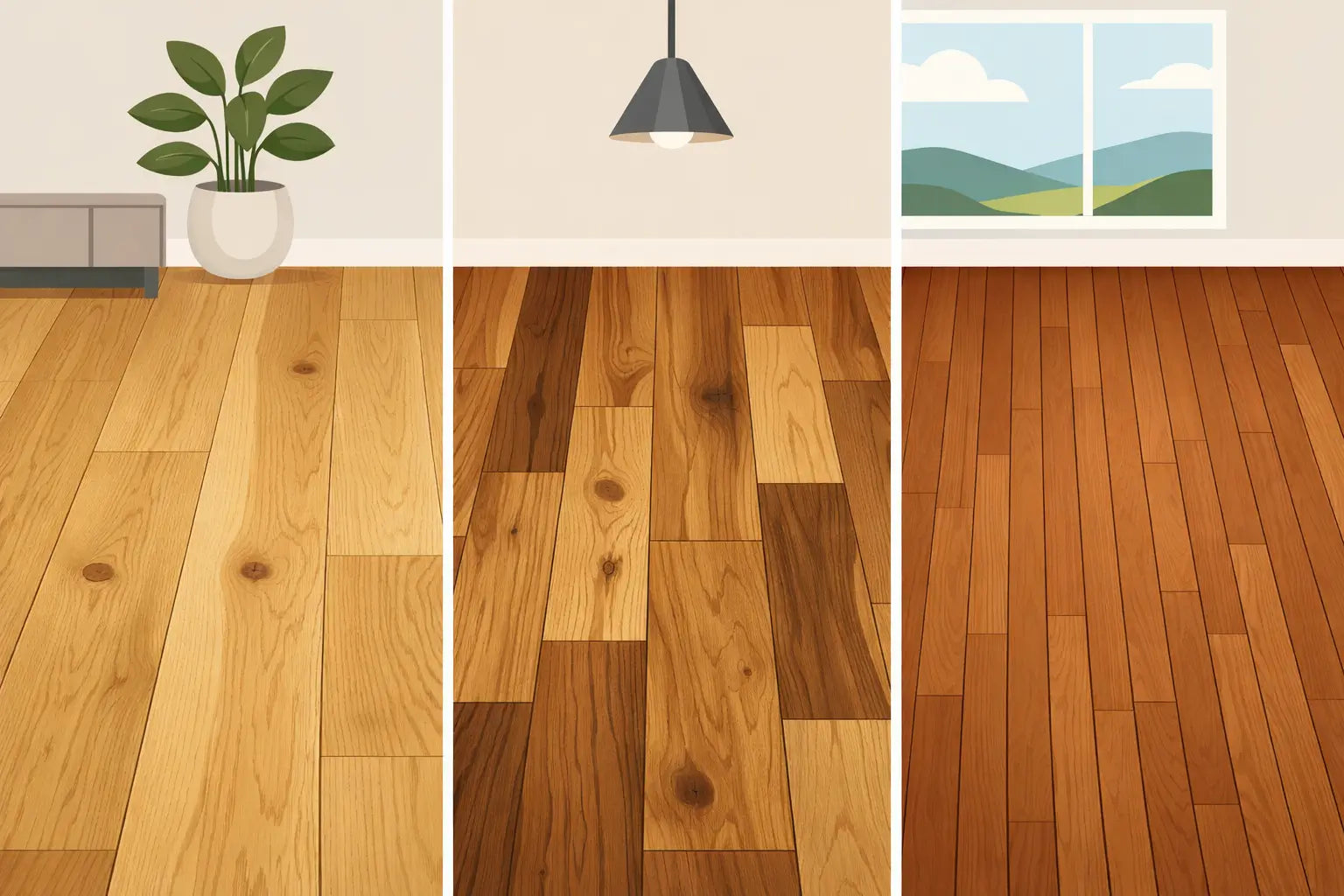
A floor can look completely different before anyone notices the paint color or furniture. That is why oak flooring vs hickory flooring vs traditional narrow planks is not a simple three-way material comparison. Oak and hickory are wood species. Traditional narrow planks are a layout and visual style that can be made from either species. The right choice comes down to how much character, hardness, movement, maintenance, and upfront value you want from the room.
For homeowners, contractors, and property investors, the best deal is rarely just the lowest price per square foot. It is first-quality flooring that fits the job, installs confidently, and still looks right years after move-in.
Oak flooring: The proven, flexible choice
Oak has earned its place in American homes for good reason. It is durable, familiar, easy to coordinate, and available in a huge range of colors and constructions. Red oak has warmer undertones and a more pronounced grain, while white oak has a cleaner, more contemporary look with tan-to-gray undertones. White oak is especially popular for natural, light, and European-inspired finishes.
Oak is hard enough for most busy households. On the Janka hardness scale, red oak measures about 1,290 and white oak about 1,360. That makes either a capable choice for living rooms, halls, bedrooms, and kitchens with normal day-to-day traffic. It will still dent and scratch if heavy objects are dragged across it or if grit is allowed to build up, but its wear tells a familiar story over time rather than becoming a problem overnight.
The biggest advantage is design flexibility. Oak accepts stain well, which gives buyers more options when matching cabinets, trim, and existing flooring. Its consistent grain also makes it easier to blend replacement boards later if repairs are needed. For a flip, rental refresh, or whole-home remodel where broad buyer appeal matters, oak is often the safest premium choice.
Oak is not always the best answer for buyers who want dramatic grain variation or maximum dent resistance. If the home has large dogs, active kids, heavy furniture, or a more rustic design direction, hickory may justify the move up.
Hickory flooring: More hardness, more natural character
Hickory is one of the hardest domestic hardwoods commonly used for flooring, with a Janka rating around 1,820. That extra hardness helps it stand up to everyday impacts, making it a strong contender for active family homes, main-level living areas, and properties where durability is a priority.
Its visual personality is just as distinct as its performance. Hickory commonly shows bold grain, mineral streaks, knots, and significant color variation from board to board. A single floor may include creamy blonde, medium brown, and deeper caramel tones. That movement can make a room feel warm, substantial, and custom without relying on a dark stain.
This character also creates a trade-off. Hickory is not the best choice for a buyer who wants every board to look uniform. Natural variation is part of the product, not a defect. Before ordering, review actual product photos and samples when available, then consider how the floor will read across the entire room rather than judging one plank by itself.
Because hickory is dense, it can be more demanding to install than oak. Proper acclimation, correct fasteners, and an experienced installer matter, particularly with solid hardwood. For DIY projects, engineered hickory may offer a more manageable route depending on the installation system and subfloor conditions. It can also be priced above oak, but liquidation pricing can narrow that gap and put a premium hickory look within reach.
Oak flooring vs hickory flooring vs traditional narrow planks
The key distinction is this: choosing oak or hickory determines the wood’s grain, hardness, and natural variation. Choosing traditional narrow planks determines the floor’s scale and pattern. You can install narrow-plank oak for a classic, refined floor or narrow-plank hickory for a more textured traditional look.
Traditional narrow planks generally measure about 2 1/4 to 3 1/4 inches wide. They were common in older homes because lumber dimensions, installation practices, and design preferences favored a tighter pattern. Today, they remain a smart choice when you want an established, timeless feel rather than the expansive look of wide-plank flooring.
Narrow boards create more seams and more visible lines across the floor. In the right setting, that adds rhythm and detail. They work especially well in traditional homes, historic renovations, smaller rooms, hallways, and spaces with detailed millwork. They can also help a floor feel visually active without overwhelming a room.
Wide planks, by comparison, show off more of each board’s grain and make a space feel more open and current. They are a strong match for modern, farmhouse, Scandinavian, and transitional interiors. Neither width is automatically better. The better option is the one that supports the room’s architecture and the look you want after the furniture is in place.
When traditional narrow planks make more sense
Narrow planks can be the practical pick when you are matching existing flooring in an older home or trying to preserve a traditional style. Their smaller width can also make natural seasonal movement less noticeable board by board, although every real-wood floor still needs proper indoor humidity and installation conditions.
They are particularly effective when the floor should complement the room instead of becoming its main feature. If you have ornate cabinetry, patterned tile, antique furniture, or strong architectural details, a narrow oak floor can provide warmth without competing for attention.
The trade-off is labor and visual density. More boards mean more rows to install, and the many seams can feel busy in a large, minimalist room. A narrow-plank floor is also less likely to deliver the broad, high-end statement buyers associate with current wide-plank hardwood trends.
Choose based on the job, not just the sample
For broad resale appeal and dependable value, white oak remains hard to beat. It has the clean grain and flexible color range that fit many interiors, from traditional to contemporary. Red oak can be an excellent value choice when its warmer grain suits the home, particularly in renovations where it helps match existing oak rooms.
Choose hickory when you want visible character and extra hardness. It is a strong investment in busy homes, cabins, casual living spaces, and projects where a floor with natural variation feels intentional. A matte or low-gloss finish is especially practical because it helps everyday scuffs and dust blend in better than a high-gloss surface.
Choose traditional narrow planks when the project calls for classic proportion, compatibility with an older home, or a more detailed floor pattern. Oak is usually the easier match for that direction, but hickory can work beautifully when you want the narrow-plank format with more color and grain variation.
Construction matters as much as species. Solid hardwood can be refinished multiple times and is ideal over approved above-grade wood subfloors. Engineered hardwood uses a real hardwood surface over a layered core, offering added dimensional stability for many installation environments. Always confirm the product’s installation rating before buying, especially for concrete slabs, basements, or areas with changing humidity.
Get the premium look without paying showroom pricing
A flooring budget goes further when you compare first-quality inventory by total project value, not just the advertised square-foot price. Include trim, underlayment or moisture protection where required, delivery, installation needs, and expected waste. Ordering too little can create delays or make dye-lot matching harder, while ordering the right overage protects the project.
Factory Flooring Liquidators helps buyers shop premium hardwood options at liquidation prices, with nationwide delivery and expert guidance when the choice between species, width, and construction is not obvious. Use a room visualizer before committing to a color or plank format. It cannot replace a sample, but it can quickly reveal whether a bold hickory floor feels right in your space or whether a quiet oak floor gives the room the balance it needs.
The floor worth buying is the one that fits how the property will be used. Pick oak for adaptable, enduring style; hickory for toughness and unmistakable character; and narrow planks when classic scale is the design advantage your project needs.