
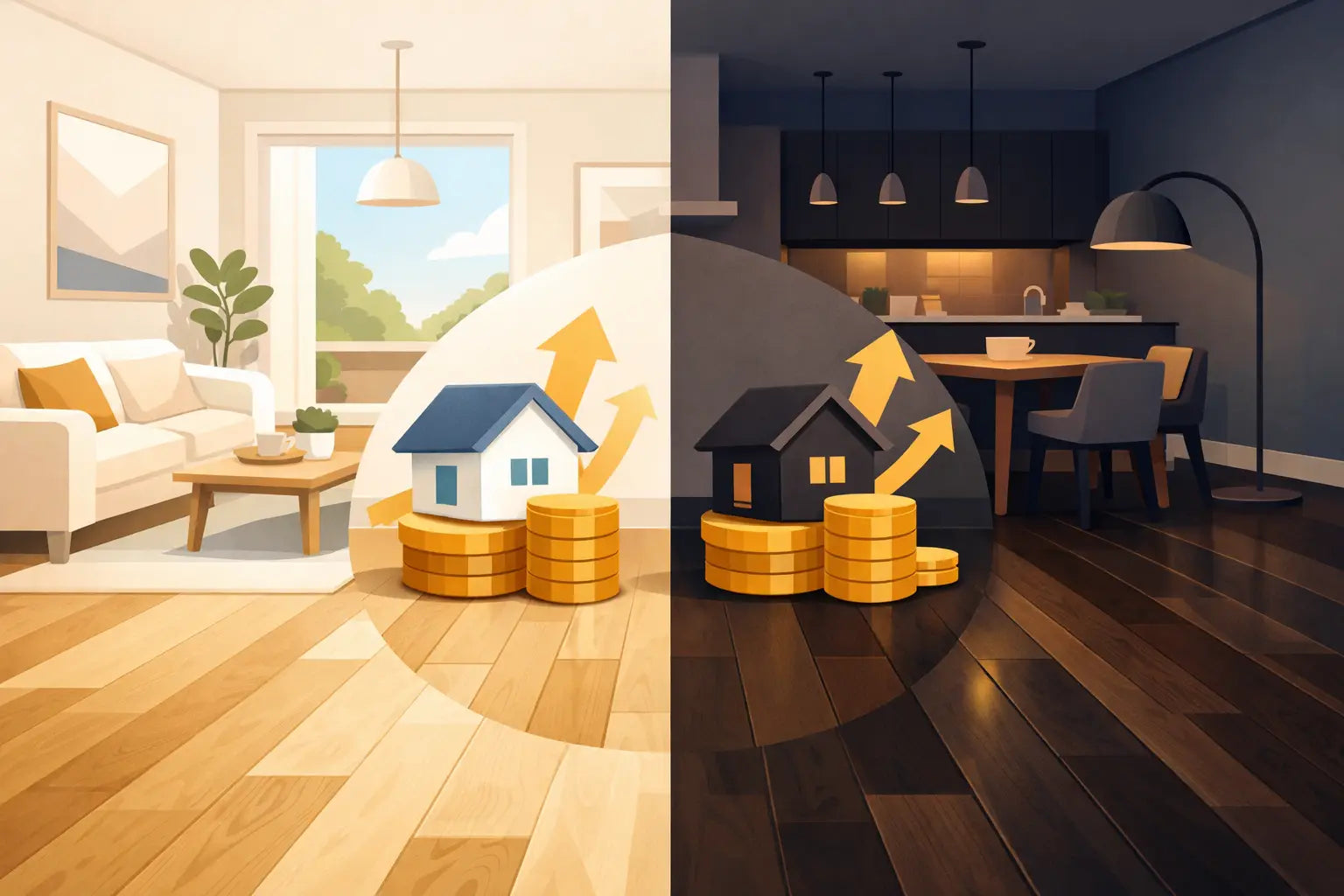
A floor can make a remodeled home feel move-in ready or make every other update look less convincing. When homeowners ask, “light floors vs dark floors: which adds more home value?” the honest answer is that neither color automatically wins. The better investment is the floor that looks premium, fits the home’s light and style, and stays attractive through everyday use.
For most resale-focused projects, light and medium wood tones have the broader buyer appeal. But a rich dark floor can be the right high-value choice in the right home. The goal is not to chase a trend at any cost. It is to install a first-quality floor that makes the space feel cohesive, durable, and worth the asking price.
Light Floors vs Dark Floors: What Buyers Notice First
Buyers do not walk through a home calculating the resale value of each plank color. They react to the overall feeling of the rooms. Is the home bright? Does it feel clean? Are the rooms open and current? Does the flooring look like it will be easy to live with?
Light floors usually help answer those questions well. Natural oak looks, pale blondes, soft greiges, and light warm browns reflect more light and make rooms appear larger. They work especially well in open floor plans, smaller homes, condos, and spaces with limited natural light. Since many buyers want an airy, updated look, light flooring often makes a property easier to market to a wider group.
Dark floors create a different reaction. Deep walnut, espresso, and charcoal-brown finishes can make a home feel tailored, dramatic, and upscale. In a larger house with abundant windows, higher ceilings, light walls, and intentional furnishings, a dark floor can deliver a premium visual payoff. It can also add welcome contrast in homes that might otherwise feel flat or overly neutral.
The key distinction is broad appeal versus specific appeal. Light floors tend to offend fewer buyers. Dark floors can make a stronger statement, but they require the rest of the room to support that statement.
Light Floors Often Win on Versatility
If your priority is resale, a light or medium-light floor is usually the safer bet. It pairs easily with white, cream, gray, beige, black, wood cabinetry, and most paint colors. That flexibility matters because future buyers do not want to feel locked into a decorating scheme before they have even moved in.
Light flooring is also forgiving in spaces that are not perfect. A narrower hallway feels less closed in. A room with one small window feels less dim. A home with mixed furniture styles can still look coordinated when the floor has a neutral, natural base.
For rentals, flips, and investor projects, this wide appeal can reduce decision friction. A light oak-look luxury vinyl plank or quality laminate provides the current wood-floor visual buyers want without forcing a high-maintenance finish on the next owner or tenant. It also makes staging easier because light floors work with simple, affordable furnishings and accessories.
That does not mean every pale floor adds value. A finish that is too white, too cool, or heavily distressed can become style-specific fast. Choose a believable wood visual with enough warmth and variation to look substantial rather than temporary.
Dark Floors Can Add Value in the Right Setting
Dark flooring is not a resale mistake. It is a design tool, and it can be highly effective when used with purpose.
A dark hardwood floor can make a formal dining room, executive office, historic home, or upscale living area feel more refined. It often looks especially strong against crisp white trim, pale cabinetry, warm wall colors, and large windows. When the home already has architectural character, dark floors can reinforce that sense of quality.
The trade-off is maintenance visibility. Dust, pet hair, footprints, and small scratches often show more clearly on very dark finishes. Buyers with children, pets, or busy schedules may see that as a drawback, even if the floor itself is durable. In dry climates or sun-filled rooms, a dark color can also make surface wear more noticeable over time.
If you love the dark-floor look but want less risk, consider a medium-dark brown with natural grain variation instead of a near-black or uniform espresso finish. You still get depth and contrast, but the floor is more forgiving between cleanings and more adaptable to changing tastes.
Color Is Only One Part of Home Value
Floor color affects perceived value, but condition and material quality usually matter more. A worn-out dark hardwood floor will not compete with a clean, well-installed light luxury vinyl plank. Likewise, a bargain-grade pale laminate with obvious repeating patterns may undermine a renovation that otherwise looks expensive.
Buyers notice details: realistic texture, clean transitions, consistent installation, trim work, and whether the floor suits the level of the home. A premium first-quality hard surface floor installed correctly sends a stronger value signal than a trendy color chosen on price alone.
This is where shopping liquidation pricing can make a real difference to a project budget. Instead of settling for lower-grade materials, homeowners and contractors can put more of their budget into a better construction, a more convincing visual, and enough material to carry the same flooring through connected spaces. That continuity often creates more perceived value than a dramatic color change from room to room.
Match the Floor to the Home, Not Just the Trend
A flooring decision should start with the home’s existing features. Look at cabinet color, wall color, ceiling height, window exposure, and the amount of natural light. A floor sample can look completely different in a bright south-facing living room than it does in a shaded hallway.
Light floors are usually a strong fit for modern farmhouse, Scandinavian-inspired, coastal, transitional, and contemporary interiors. They also work well with light kitchens and open layouts where the goal is to create a clean visual flow.
Dark floors often fit traditional, formal, transitional, and high-contrast contemporary interiors. They can be a smart choice when a home has strong white trim, deep cabinetry, brick fireplaces, or substantial millwork. In these settings, a dark floor looks intentional rather than heavy.
For many homeowners, the sweet spot is neither extreme. Mid-tone oak, warm natural brown, and balanced greige wood visuals offer a proven middle ground. They hide everyday dust better than very dark finishes, bring more depth than very pale ones, and have remained appealing across multiple design cycles.
Choose the Right Product for Everyday Use
The best color cannot overcome a floor that is wrong for the space. In kitchens, entryways, basements, and pet-friendly homes, waterproof luxury vinyl plank can offer a practical high-value solution. Many premium vinyl options provide realistic wood visuals, durable wear layers, and easier maintenance than traditional hardwood.
Hardwood remains a powerful value feature when the budget and location support it. It brings authentic character and can be refinished in many cases, which helps its long-term appeal. A light natural hardwood may feel timeless, while a medium or dark stain can give a more traditional room a richer finish.
Laminate can also make sense for budget-conscious renovations, rentals, and active households. The right first-quality laminate offers convincing texture and strong scratch resistance at a lower upfront cost. The important part is choosing a color and plank pattern that looks credible in the home, not simply selecting the cheapest box.
A Smart Resale Strategy Before You Buy
Before committing, view large samples in the actual rooms and check them in morning, afternoon, and evening light. Compare the sample against cabinets, paint, countertops, and upholstery. If you are renovating for resale, ask one practical question: will this floor help more buyers picture their own furniture in the home?
For a broad-market remodel, light to medium natural wood tones are usually the safest answer. For a design-forward property with the right scale and lighting, dark flooring can create the upscale contrast that helps the home stand out. Either choice can support stronger resale when the material is first-quality, the installation is clean, and the finish belongs in the house.
Factory Flooring Liquidators makes that decision easier by pairing premium hardwood, vinyl, and laminate choices with unbeatable liquidation prices, expert guidance, and tools that help you see the floor before you commit. Choose the color that makes your rooms look larger, cleaner, and more valuable - then buy the quality that lets that impression last.