
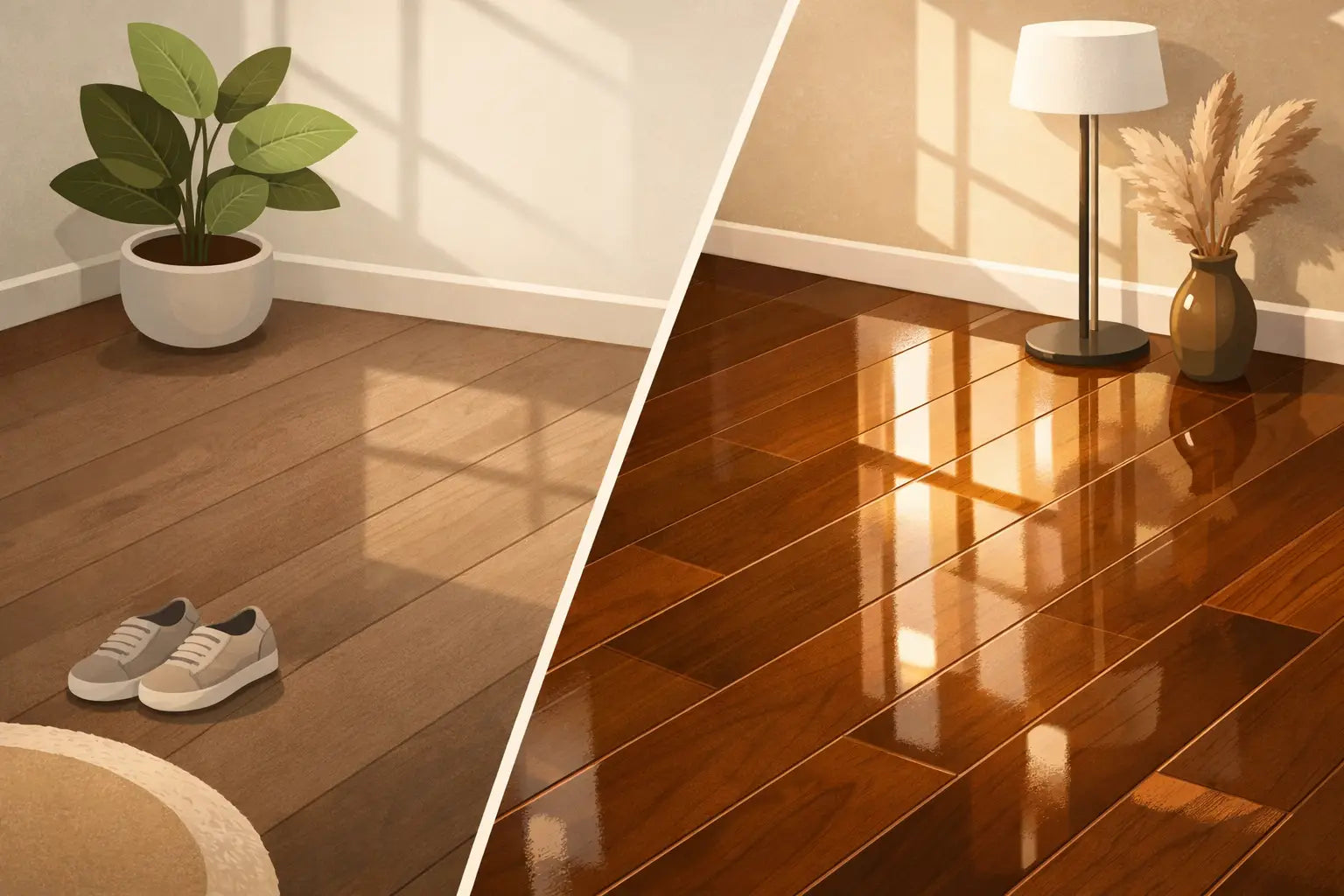
A hardwood floor can look completely different under the same paint color and furniture simply because of its sheen. In the matte finish vs gloss finish hardwood flooring decision, the better option is not automatically the shiniest, most expensive-looking choice. It is the finish that fits the room’s light, traffic, maintenance expectations, and the kind of value you want from your investment.
For homeowners, renovators, and property buyers, sheen deserves more attention than it usually gets. It affects how much dust you see after a busy week, how visible scratches become, whether a room feels current or formal, and how forgiving the floor will be over time. The good news: premium hardwood does not need a high-gloss coating to make a strong impression.
Matte Finish vs Gloss Finish Hardwood Flooring: The Core Difference
The finish is the clear protective coating applied over the wood, and sheen refers to how much light that coating reflects. A matte finish has very little reflectivity. It absorbs and diffuses light, giving hardwood a softer, more natural appearance. Gloss finish hardwood reflects significantly more light, creating a polished surface with noticeable shine.
Satin and semi-gloss sit between those two ends of the spectrum. They are common choices, but matte and gloss show the clearest contrast. If you want wood grain, knots, and color variation to be the main event, matte usually delivers. If you want the floor itself to look sleek, formal, and highly finished, gloss makes a stronger visual statement.
Neither sheen changes whether the hardwood is first-quality, engineered, or solid. Construction, species, plank thickness, wear layer, and finish quality still matter. Sheen simply changes the way that floor looks and lives in your space.
Why Matte Hardwood Has Become the Practical Favorite
Matte hardwood is popular because it makes everyday life easier without looking plain. Its low-reflective surface gives rooms a relaxed, upscale look that works especially well with wide planks, oak grain, warm neutrals, black hardware, textured rugs, and modern or transitional interiors.
The biggest advantage is forgiveness. Dust, light footprints, small scuffs, pet hair, and minor surface scratches tend to blend into a matte floor far better than they do on a glossy surface. That matters in entryways, kitchens, living rooms, hallways, and homes with children or pets. It also matters for rental properties and flips, where a floor should keep looking presentable between cleanings and showings.
Matte finishes are especially effective in rooms with lots of windows. Bright sun can make a gloss floor reflect like a mirror and reveal every streak or scratch. Matte softens that effect. The floor still has depth, but it does not compete with the room’s natural light.
There is a trade-off. Matte can make a room feel less bright than a reflective finish, particularly when the hardwood color is dark and the space has limited light. It is also not maintenance-free. Dirt still needs to be removed promptly, and the manufacturer’s cleaning guidance still matters. Matte simply gives you more breathing room between perfect cleanings.
When Gloss Hardwood Flooring Makes Sense
Gloss hardwood is not outdated. It is a purposeful choice for a specific look. A glossy floor reflects light and can make a formal dining room, polished foyer, or traditional home feel more refined. It can bring out the richness of a smooth, consistent wood surface and give lighter spaces a crisp, finished appearance.
For a lower-traffic room where appearance takes priority over daily wear, gloss can be a smart fit. Think formal entertaining spaces, select bedrooms, or a carefully maintained home with no large pets and limited direct sunlight. A glossy finish can also suit classic design preferences, especially alongside detailed trim, traditional cabinetry, or more formal furniture.
The downside is visibility. Gloss shows what matte hides. Fine scratches, smudges, dust, footprints, and cleaning streaks are easier to spot because light bounces directly off the surface. Dark gloss floors are the most demanding combination. They can look spectacular right after a thorough cleaning, then reveal traffic quickly.
That does not make gloss a poor value. It means it requires a realistic maintenance commitment. If a client or household expects the floor to look spotless every day, they need to be comfortable sweeping often, using the right hardwood-floor cleaner, and protecting high-traffic areas with runners and rugs.
Appearance Is About More Than Shine
The same hardwood color can read warmer, cooler, lighter, or more dramatic depending on the sheen. Matte finishes tend to emphasize the wood itself. They make grain patterns, wire-brushed texture, and natural variation look authentic and dimensional. That is why matte is a strong match for white oak, hickory, rustic grades, and wider plank formats.
Gloss finishes emphasize reflection more than texture. On a smooth floor with a uniform stain, that can create a beautiful, furniture-showroom look. On heavily textured or distressed planks, high gloss may feel less natural because the finish and texture are pulling in different directions.
Before ordering, view a large sample in the actual room. Look at it in morning light, afternoon sun, and evening artificial light. If you are buying online, use a room visualizer to narrow the field, then confirm the sheen and color with a sample whenever possible. A screen can help you compare styles, but it cannot fully duplicate the way light moves across real hardwood in your home.
Durability: Do Not Confuse Sheen With Strength
A common mistake is assuming a glossier finish is tougher because it looks more sealed. In reality, sheen and durability are separate considerations. A quality matte finish can be highly durable, and a gloss finish can be durable too. The performance depends on the coating system, the number of finish layers, the hardwood construction, and how the floor is used.
What does change is scratch visibility. A small scratch on gloss hardwood may catch the light and become noticeable from across the room. The same scratch on a matte floor is often less obvious. For busy households, that difference can make matte feel more durable in practice, even if both floors have comparable protective coatings.
Engineered hardwood with a durable factory-applied finish is often a strong value choice for remodels, basements, and projects where solid hardwood may not be the right installation fit. Whether you select matte or gloss, focus on first-quality material and a finish designed for residential traffic. Low pricing should never mean accepting lower-grade flooring when premium options are available at liquidation pricing.
Cleaning and Maintenance Expectations
Both finishes benefit from the same basics: use mats at exterior doors, add felt pads under furniture, clean spills quickly, and avoid soaking hardwood with water. Regular sweeping or vacuuming with a hard-floor setting prevents grit from acting like sandpaper underfoot.
Matte is the easier finish for most active homes because it is less likely to show every cleaning mark. With gloss, cleaning technique matters more. Using too much product or the wrong cleaner can leave haze and streaks that show under overhead lights or sunlight. Follow the flooring manufacturer’s recommendations and avoid waxes, oil soaps, steam mops, and abrasive tools unless the product instructions specifically allow them.
For contractors and investors, maintenance is also a turnover issue. A matte floor is often easier to present after routine cleaning, which can reduce the visual impact of normal wear between tenants or before listing a property. Gloss may be worth the effort in a high-end, low-traffic space, but it is rarely the most forgiving choice for a hard-working rental.
Which Finish Delivers the Best Value?
Matte is usually the safer all-around recommendation for a family home, pet-friendly space, open-concept remodel, rental, or high-traffic project. It offers current style, hides everyday evidence of use, and lets premium wood character stand out. If you want a floor that looks expensive without demanding constant attention, matte is hard to beat.
Gloss is the better choice when your priority is a polished, formal appearance and you are prepared for more visible upkeep. It works best when the room has controlled traffic, the design calls for shine, and the household accepts that a reflective floor needs regular care to stay at its best.
Price should be evaluated beyond the initial square-foot cost. A premium first-quality hardwood floor at a liquidation price can deliver better long-term value than a cheaper product with less desirable construction or finish performance. Factory Flooring Liquidators helps buyers compare premium options without the traditional showroom markup, so you can put more of your budget into the material that fits the project instead of paying extra for presentation.
When you are down to two finishes, do not choose under store lighting alone. Put samples beside your cabinets, walk them near the windows, and imagine them after a normal week of shoes, pets, cooking, and life. The right hardwood finish is the one you will still be glad to see before you have had time to clean it.