
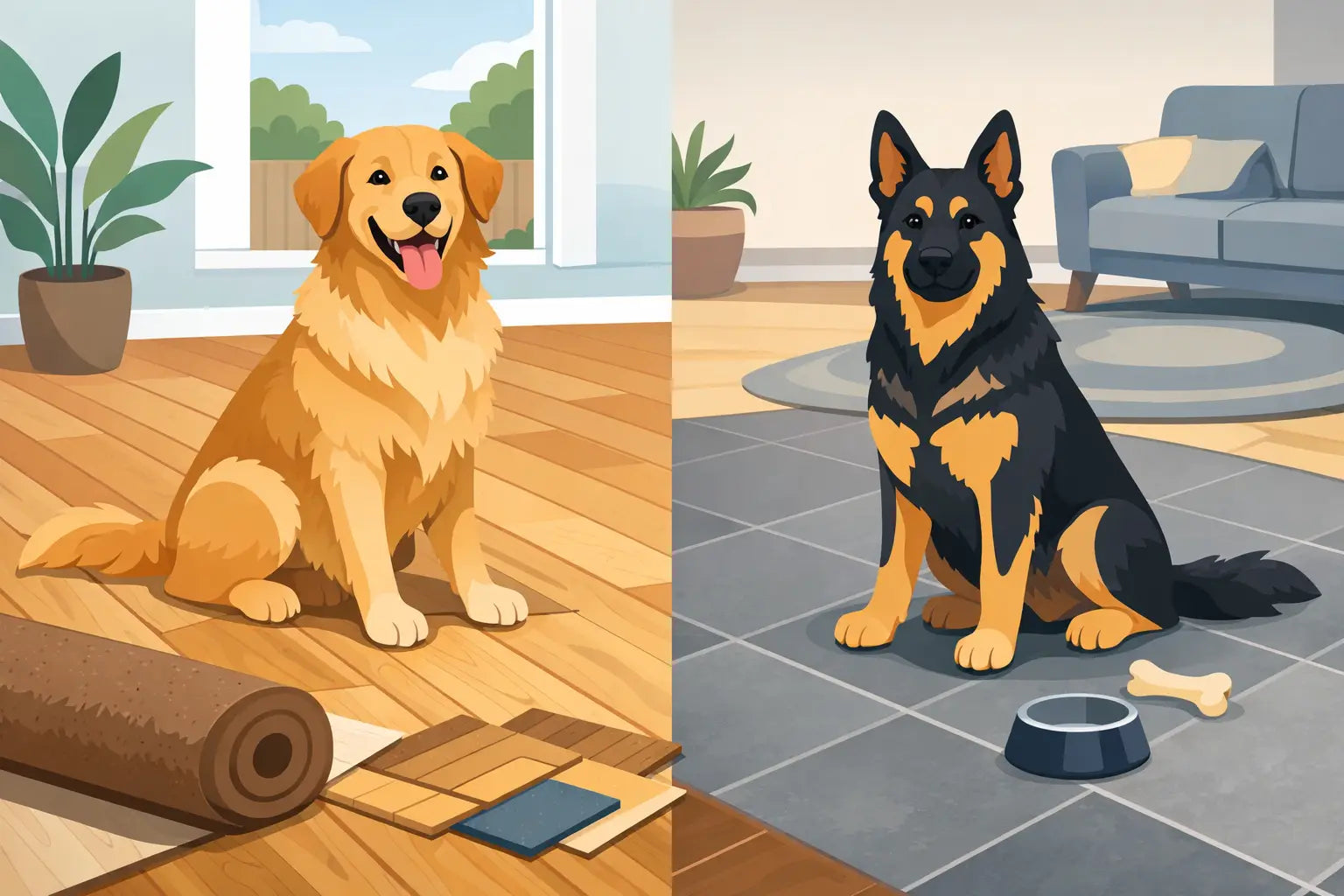
A 90-pound dog does not walk through a house the way a person does. They sprint after toys, skid around corners, shake off water by the door, and occasionally drag grit across the floor after a backyard lap. So, what flooring should I install if I have large dogs? For most active dog households, premium luxury vinyl plank is the strongest all-around choice because it combines water resistance, scratch performance, comfortable footing, and realistic wood looks at a practical price.
That does not mean vinyl is the only answer. The right floor depends on your dog's activity level, nail maintenance, room conditions, and how much you value authentic hardwood versus easy cleanup. The goal is not to find a mythical "dog-proof" floor. It is to choose a first-quality floor that handles real life without forcing you to worry about every zoomie, muddy paw, or dropped water bowl.
What Flooring Should I Install If I Have Large Dogs?
Start with the demands large dogs place on a floor. Bigger dogs create more pressure under their paws, and their nails can leave marks where they pivot or launch into a run. Their weight also makes weak locking systems and thin materials more noticeable over time. Add water bowls, accidents, rain, snow, and tracked-in dirt, and flooring needs to do more than simply look good on day one.
Luxury vinyl plank, often called LVP, is usually the smart value play. It is waterproof when properly installed, easy to clean, and available in convincing oak, hickory, maple, and contemporary wide-plank visuals. Quality vinyl also has a softer, warmer feel underfoot than tile, which can be easier on dogs that spend a lot of time lying on the floor.
Look for a rigid-core vinyl plank with a durable wear layer, a reliable click-lock system, and a textured finish. For a busy home with large dogs, a 20 mil wear layer is a strong target. It is not a guarantee against every claw mark, but it offers the everyday protection active households need. A realistic embossed texture also helps hide small scuffs better than a smooth, glossy surface.
Why Luxury Vinyl Plank Wins for Most Dog Owners
The biggest advantage of vinyl is its balance. Hardwood can be beautiful, and laminate can be a terrific budget-conscious option, but vinyl handles moisture with far less drama. If your dog knocks over a water bowl or comes inside dripping wet, you can wipe up the mess without worrying that water will soak into the core and cause swelling.
Vinyl is also easy to live with. Regular sweeping or vacuuming removes abrasive dirt and sand, while a damp mop handles paw prints and everyday messes. Choose a product with a low-gloss finish and natural grain variation. Those details make a floor more forgiving because light scratches, shed hair, and dust do not stand out as sharply as they do on a dark, polished, uniform surface.
Color matters more than many shoppers expect. Medium wood tones, greige, warm taupe, and natural oak colors tend to disguise paw prints and pet hair better than nearly black flooring or very pale solid colors. If your dog has white or light-colored fur, a heavily dark brown plank may look great in a sample but demand more frequent cleaning in a full room.
Luxury vinyl is not invincible. Extremely sharp nails, dragged furniture, and gritty debris can still damage its surface. The practical difference is that a quality product gives you a high-performing, water-ready floor without the maintenance concerns that often come with natural wood.
Laminate Is a Strong Option in the Right Rooms
Premium laminate deserves a serious look if scratch resistance is your top concern and moisture exposure is limited. High-quality laminate surfaces can be exceptionally resistant to everyday wear, including claw traffic. It also delivers detailed wood visuals and a firm, stable feel at an attractive price point.
The trade-off is water. Many modern laminates have water-resistant construction, and some are designed to manage surface moisture for a defined period. That is helpful for quick cleanup, but it is not the same as waterproof vinyl. Standing water, repeated accidents, or moisture that reaches seams can still create problems depending on the product and installation.
Laminate works especially well in living rooms, bedrooms, upstairs spaces, and other dry areas where dogs spend time but spills are addressed quickly. For a mudroom, laundry room, entryway, or a home with a dog that frequently comes in wet, vinyl is usually the safer choice.
Pay attention to surface texture here, too. A slick laminate can make a large dog feel unstable, particularly as they age. A matte finish with embossed grain provides better traction and a more natural appearance. Do not select a floor based on scratch ratings alone if your pet will be sliding across it all day.
Can You Install Hardwood With Large Dogs?
Yes, but hardwood is a lifestyle choice rather than the low-maintenance choice. Genuine hardwood delivers depth, warmth, and the kind of character that many homeowners want in a long-term renovation. It can also be refinished in the future, which gives it an advantage over floating floor products when wear eventually becomes visible.
However, large dogs and hardwood require realistic expectations. Dog nails can dent softer species, especially in high-traffic zones. Water left on the surface can damage the finish or affect the wood beneath it. You will need to sweep regularly, clean spills promptly, and accept that a lived-in hardwood floor may develop a little character over time.
If hardwood is the look you want, choose a harder species and a durable factory finish. White oak is often a practical choice because its grain helps camouflage minor wear. Hickory is harder and can perform well in active households, although its dramatic grain is a distinct design preference. Avoid very soft woods and highly glossy finishes, which tend to show scratches and dents faster.
Engineered hardwood may be a better fit than solid hardwood for many homes because it offers real wood on top with greater dimensional stability. Still, it is not waterproof. Use it in dry living areas, not in the places where your dog comes in from the rain or where water bowls regularly spill.
Features That Matter More Than a Marketing Label
Terms like scratch-resistant, waterproof, and pet-friendly are useful starting points, but they do not replace product details. When comparing flooring for a large dog household, focus on the construction and finish that support your daily routine.
A low-gloss or matte finish is more forgiving than high shine. Textured surfaces improve traction and disguise small marks. Wider planks with natural color variation can make a space feel more premium while helping everyday debris blend in. For vinyl, prioritize a substantial wear layer and rigid core. For laminate, look for a water-resistant construction and a strong abrasion rating. For hardwood, consider species hardness, finish quality, and whether future refinishing matters to you.
Do not overlook installation. A level, clean subfloor helps click-lock planks stay tight and reduces movement that can stress joints. Proper expansion gaps are essential, especially with floating floors. If you are installing over concrete or in a lower-level space, follow the product's moisture and underlayment requirements exactly. The best flooring product can underperform if it is installed in the wrong conditions.
Make Any Floor Last Longer With Dogs
A few habits protect every type of hard-surface flooring. Keep nails trimmed and smooth, because sharp nail tips do more damage than normal walking. Place absorbent mats by exterior doors and under water bowls, then use a washable runner in the hallway or area where your dog makes frequent high-speed turns.
Sweep or vacuum grit often. Tiny particles of sand act like sandpaper under paws, especially near entries and patios. Use a hard-floor vacuum setting or a soft-bristle attachment rather than a rotating beater bar that could scuff the surface.
If your dog is older or has mobility concerns, prioritize traction over the glossiest possible look. A textured vinyl plank or matte laminate can be more comfortable for a dog with joint pain than a slick surface. Area rugs can help, but use rug pads that are approved for your flooring type so they do not discolor the finish or trap moisture.
Get a Premium Look Without Paying a Pet Penalty
Large dogs should not force you into cheap-looking floors or a renovation budget that feels out of reach. The better move is to spend strategically on first-quality flooring with the performance features your household actually needs. For most homes, a premium rigid-core luxury vinyl plank provides the best combination of durability, easy care, convincing design, and value.
Factory Flooring Liquidators helps homeowners compare premium vinyl, laminate, and hardwood at liquidation pricing, so you can prioritize the right construction instead of settling for lower-grade materials. Use a room visualizer to see how a color works with your walls, furniture, and natural light before making a final decision.
Choose the floor that fits your real routines, not just the cleanest room photo. When the product has the right texture, finish, moisture protection, and construction, you can enjoy a polished home that still has room for a big dog to be a big dog.