
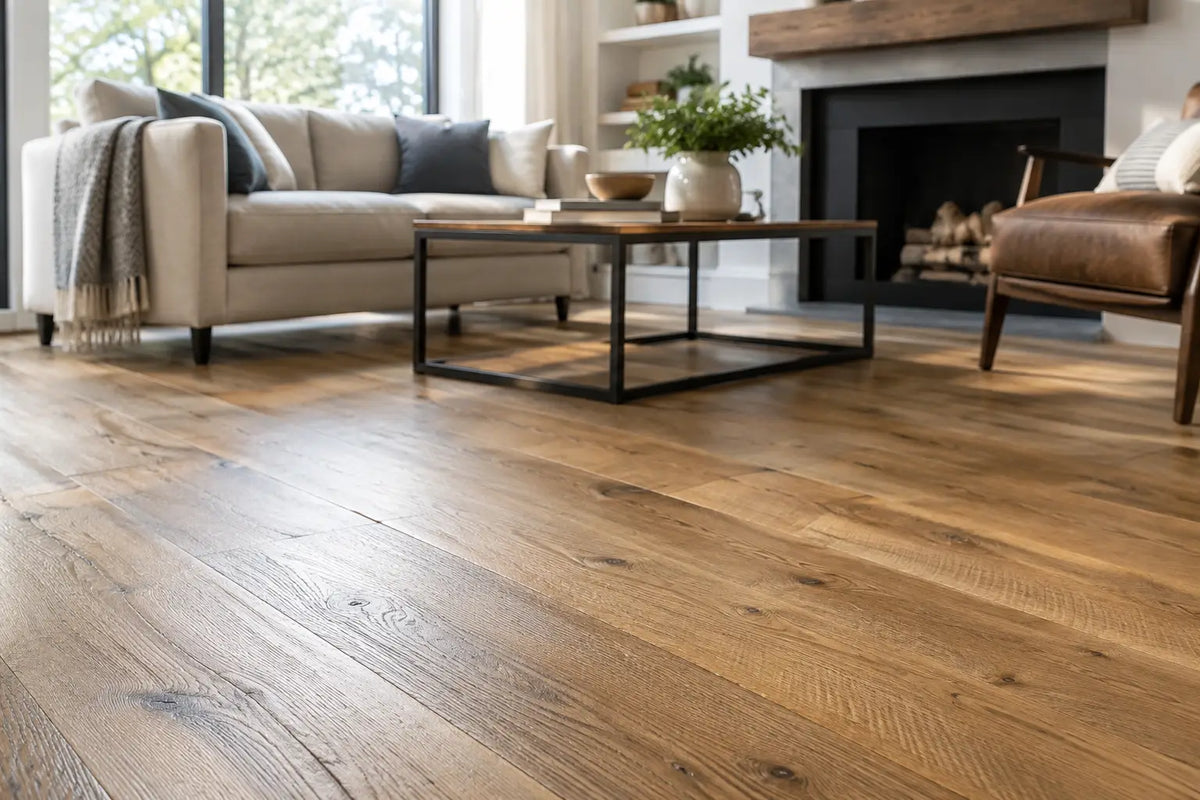
A smooth hardwood floor shows nearly everything: a dragged dining chair, a dog’s excited sprint to the door, a missed grain of sand near the entry. Wire-brushed hardwood flooring takes a different approach. Its surface is intentionally textured to bring out the natural grain, creating a floor with depth, character, and a more forgiving everyday appearance.
That texture is a major reason homeowners, renovators, and property owners consider it for active spaces. But it is not simply a style decision. The finish affects how the floor feels underfoot, how it catches light, how it cleans, and how easily it fits the way a household actually lives. The right choice comes down to your wood preference, room conditions, maintenance expectations, and desired look.
What Makes Wire-Brushed Hardwood Flooring Different?
Wire brushing is a texturing process that removes softer portions of the wood grain while leaving the denser grain more pronounced. The result is a subtly sculpted surface rather than a perfectly flat, uniform one. You can often see and feel the grain, especially in wider planks and styles with matte or low-sheen finishes.
This treatment works particularly well with naturally expressive wood species and color variations. Instead of trying to make wood look flawless and identical from board to board, it highlights the characteristics that make real hardwood appealing in the first place.
The finished floor can range from gently textured to distinctly rustic. One wire-brushed product may feel refined and modern, with soft grain definition and a clean neutral color. Another may have stronger texture, knots, color movement, and a more time-worn appearance. Photos help narrow the field, but viewing full boards in a showroom or ordering a shipped sample can make the difference easier to judge.
Why Homeowners Choose a Brushed Texture
The most practical benefit is visual forgiveness. Surface texture, grain variation, and lower-gloss finishes can make small scuffs, dust, and everyday wear less noticeable than they might be on a dark, smooth, high-gloss floor. That does not make wire-brushed wood damage-proof, but it can make normal life less visually demanding.
This is especially appealing in living rooms, hallways, kitchens, and open-concept spaces where floors receive steady traffic. Families with children and pets often like the relaxed appearance. Rental-property owners and investors may also appreciate a floor that looks intentional and substantial without requiring a perfectly pristine presentation between occupants.
Design flexibility is another advantage. Wire-brushed hardwood pairs naturally with white cabinetry, warm neutrals, black metal accents, stone, exposed beams, and painted millwork. It can support a farmhouse-inspired room, but it is not limited to that look. Cleaner colors and wider boards can feel very current in transitional, contemporary, and modern organic interiors.
The Trade-Offs to Consider Before Buying
Texture is not the same thing as durability. The wood species, construction, finish system, wear layer in engineered flooring, installation conditions, and care habits still matter. A textured surface may help camouflage minor signs of use, but heavy impacts, standing water, and deep scratches can still damage hardwood.
Cleaning also requires a little more attention. The grain texture can hold fine debris if a floor is neglected, particularly near exterior doors and in homes with pets. Regular sweeping or vacuuming with a hard-floor setting is usually more important than aggressive wet cleaning. Use a manufacturer-approved hardwood cleaner and a lightly damp microfiber mop when needed. Avoid soaking the floor, steam mops, abrasive pads, and cleaners that leave a heavy residue.
Color deserves careful thought as well. Lighter natural tones and medium browns often conceal dust better than very dark stains. Strong color variation can be an asset in a busy home because it creates movement across the floor, but it may not suit a project that calls for a highly uniform, formal appearance.
Finally, remember that texture changes the feel of the floor. Many shoppers love the tactile quality, while others prefer the cleaner touch of a smooth plank. This is why samples and in-person viewing are useful before ordering flooring for an entire home.
Solid or Engineered: Which Construction Fits the Project?
Wire-brushed styling is available in both solid and engineered hardwood. The better choice depends less on appearance and more on where the flooring will be installed.
Solid hardwood is milled from one piece of wood. It is a traditional choice for appropriate above-grade areas and can offer long-term refinishing potential, depending on the product and condition. It generally performs best where indoor humidity is managed and the subfloor and installation method meet manufacturer requirements.
Engineered hardwood uses a real hardwood surface over a layered core. Its construction can make it a practical option for many main-level rooms, condos, and projects where dimensional stability is a key consideration. It is still real wood, so it needs proper care and is not a substitute for waterproof flooring in moisture-prone spaces.
For renovations, do not choose solely by construction label. Review the product specifications, plank dimensions, installation requirements, finish, and room conditions. A knowledgeable flooring specialist can help match those details to the project instead of leaving you to compare marketing terms alone.
Where Wire-Brushed Hardwood Works Best
Wire-brushed hardwood flooring is often a strong fit for bedrooms, living areas, dining rooms, home offices, and hallways. It can be especially effective in open plans where flooring becomes a major visual element and needs to connect several rooms without looking overly polished or fragile.
In kitchens, the decision depends on the household. Hardwood can create a warm, cohesive look when the kitchen opens to living space, but spills should be wiped up promptly and floor protection should be used under furniture. For bathrooms, laundry rooms, and other areas with routine moisture exposure, consider a waterproof flooring option designed for that application instead.
For rental homes, flips, and investment properties, the goal is usually balanced value: an attractive floor that supports the property’s positioning without overbuilding the budget. A first-quality closeout or special-buy hardwood can create that opportunity when the style, quantity, and specifications align with the scope of work. Since closeout inventory can change, it is smart to confirm available square footage and purchase enough material for the complete project, plus the recommended allowance for cuts and future needs.
How to Shop the Look Without Making a Costly Mistake
Start with the room, not just the color swatch. Consider how much daylight the room receives, whether the surrounding finishes are warm or cool, and how the floor will transition into adjacent spaces. A board that looks gray in a product image may read warmer in your home, while a richly textured plank can look more subtle once installed across a larger area.
Then compare more than price per square foot. Look at product construction, board width, length range, finish sheen, texture level, installation method, and expected waste. Wider planks can make a space feel more open, but they may require more thoughtful layout planning. Random lengths often create a natural installed pattern, while longer boards can emphasize a cleaner, more expansive look.
For online buyers, request a sample when available and inspect it in the actual room at different times of day. For Dallas-Fort Worth shoppers, a showroom visit can make it easier to compare textures and colors side by side. Nationwide customers can still make confident decisions with clear product details, shipped samples, and expert support before placing an order.
At Factory Flooring Liquidators, changing factory-closeout, discontinued, overstock, and special-buy opportunities can give shoppers access to first-quality flooring at exceptional value. The savings come from sourcing, not from presenting lower-grade material as a bargain. That distinction matters when you are choosing a floor meant to remain part of your home or property for years.
A Floor That Looks Better Lived In
Wire-brushed hardwood is a smart choice when you want authentic wood with visible grain, a lower-fuss visual profile, and character that does not depend on a flawless surface. Choose the texture level and construction carefully, verify the product suits the room, and buy from available inventory with a complete project plan in mind. The best hardwood floor is not the one that looks perfect only on installation day - it is the one that still feels right after real life happens on it.