
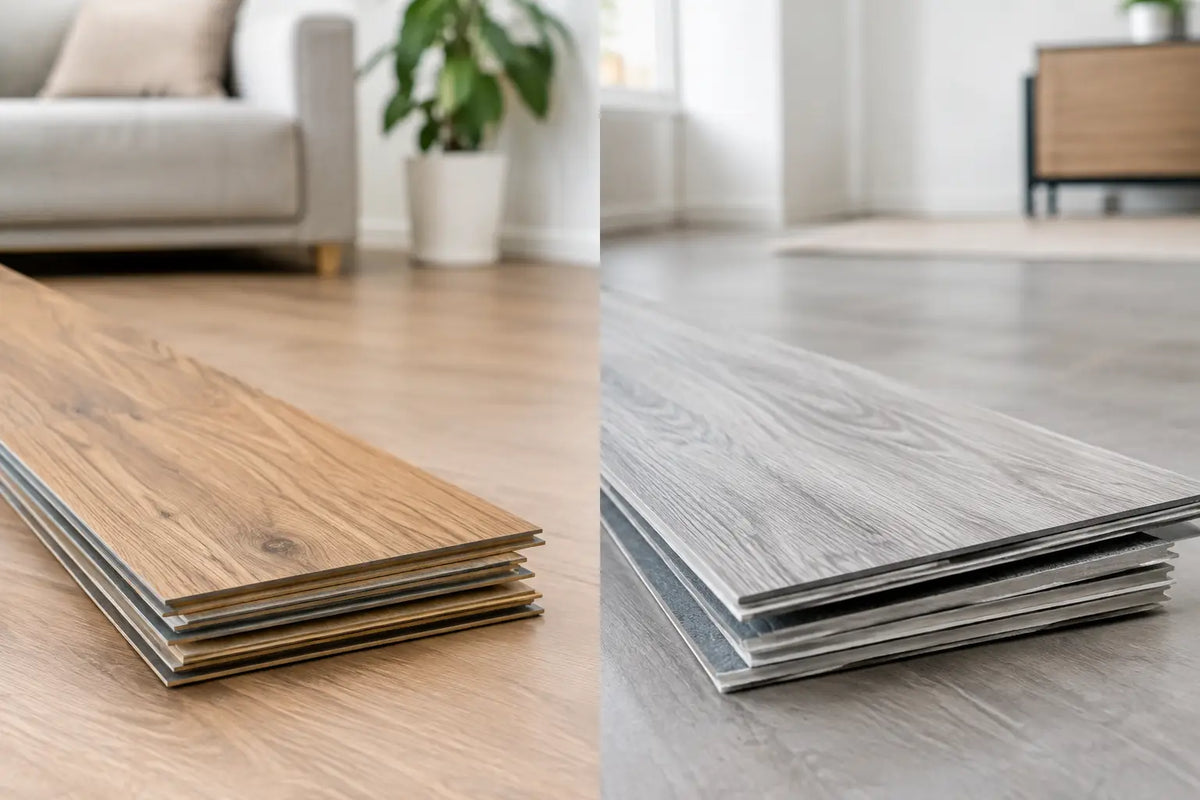
A luxury vinyl floor can look equally convincing in a product photo, yet feel very different once it is installed. In the WPC floors vs SPC floors decision, the key distinction is not the decorative wood-look layer. It is the core beneath it - and that core affects comfort, dent resistance, sound, and the rooms where the floor makes the most sense.
Both options are popular waterproof luxury vinyl plank choices for busy homes, remodels, rentals, and commercial spaces. Both can offer realistic visuals, click-lock installation, and low-maintenance performance. The better choice depends on what your project needs most: a softer, warmer feel underfoot or a firmer, more impact-resistant floor.
WPC Floors vs SPC Floors: The Core Difference
WPC stands for wood plastic composite, although the core is not solid wood. It is a composite vinyl core that is typically lighter and more cushioned than SPC. Many WPC products have a foamed or expanded core structure, which gives the plank a little more give when walked on.
SPC stands for stone plastic composite. Its dense core includes mineral content that creates a more rigid, stable plank. That density is the reason SPC is commonly chosen for high-traffic spaces, active households, and projects where resistance to dents and pressure matters.
Neither category is automatically better. A well-made WPC floor can be an excellent residential choice, while a quality SPC floor can deliver impressive style and long-term value. Wear-layer thickness, locking system, attached pad, plank construction, and manufacturer installation requirements still matter. Comparing the full product specification is more useful than choosing based on the acronym alone.
Choose WPC When Comfort Matters Most
WPC flooring is often the more comfortable option underfoot. The core can soften the feel of standing and walking, which is noticeable in bedrooms, living rooms, and kitchens where people spend a lot of time on their feet. It can also have a slightly quieter sound than a rigid SPC plank, particularly when the product includes a quality attached pad.
That comfort can make WPC appealing for homeowners replacing older hard surfaces and wanting a warmer feel without giving up the easy care of luxury vinyl. It is also a strong fit for upper-level rooms, where reducing everyday footfall sound can be part of the goal.
The trade-off is that the softer core may be less resistant to concentrated pressure. Heavy furniture, narrow furniture legs, rolling loads, and dropped objects can be more demanding on WPC than on a dense SPC floor. This does not rule WPC out for a whole-home renovation, but it does mean homeowners should use furniture protectors and consider how the room will be used.
Choose SPC for Strength and Busy Spaces
SPC flooring has a firmer feel, but it earns its reputation in demanding rooms. Its dense, rigid core helps it handle heavy everyday traffic and is generally better suited to conditions where dents, impacts, and furniture loads are a concern. For rental properties, homes with energetic kids or pets, entry areas, and active kitchens, that extra rigidity can be a practical advantage.
SPC is also a frequent choice for investors, flippers, and property managers who want a first-quality waterproof floor that presents well and is built for routine use. The planks tend to feel solid and substantial, especially when installed over a properly prepared subfloor.
The same density that gives SPC its strength can make it feel harder underfoot. If comfort is your first priority, it may not have the softer step of WPC. An attached pad can improve sound and feel, but it will not make SPC perform exactly like a cushioned-core floor.
What about temperature changes?
Rigid-core flooring is valued for dimensional stability, but every product has installation limits. Sun-filled rooms, large open layouts, unconditioned spaces, and areas with extreme temperature swings deserve extra attention before you order. Review the product's installation instructions for expansion requirements, approved subfloors, and temperature guidance.
Do not assume that “waterproof” means a floor can be installed anywhere or exposed to standing water indefinitely. The vinyl plank itself may resist water, while moisture beneath the floor, unprepared subfloors, or water entering around edges can still create problems. Fast cleanup and correct installation remain part of protecting your investment.
Appearance and Maintenance Are Usually a Tie
WPC and SPC can both deliver the natural wood visuals that make luxury vinyl a favorite for renovations. Wide planks, embossed textures, matte finishes, and varied color tones are available across both categories. If you are choosing between two floors based on appearance, focus on the actual visual: how it works with cabinets, wall color, lighting, and the rooms beside it.
Maintenance is similarly straightforward. Regular sweeping or vacuuming with an appropriate hard-floor setting helps remove grit, while a manufacturer-approved cleaner can handle routine cleaning. Avoid aggressive abrasives, harsh chemicals, and excess water. Entry mats and felt protectors under furniture are simple safeguards for either type of floor.
For shoppers ordering online, viewing a sample in the actual room is one of the smartest ways to narrow the decision. A color that looks warm on a phone screen can appear cooler beside a north-facing window or dramatically different under evening lighting. Factory Flooring Liquidators offers free samples, with shipping applied, so you can check the look and texture before committing to a larger order.
How to Compare WPC and SPC Beyond the Label
When you find a WPC or SPC floor you like, look beyond the core. Start with the wear layer, which is the clear protective surface over the printed design. A thicker wear layer can be valuable for heavier residential use, rentals, and commercial applications, but it should be considered alongside the floor's overall construction and the demands of the space.
Next, examine the attached pad and locking profile. An attached pad may help with sound control and installation convenience, but requirements vary by product. Adding an unapproved underlayment can interfere with locking systems or affect warranty coverage. The locking system itself matters because clean, secure joints support a polished finished appearance.
Finally, confirm the quantity before purchasing. Measure each room carefully, account for closets and adjoining areas that will receive flooring, and include a reasonable overage for cuts and layout. The right percentage varies with room shape, plank direction, and the amount of waste a project is likely to create. If you are working with a closeout, discontinued style, or special-buy opportunity, purchasing enough for the complete project and a few future repairs can be especially worthwhile because matching inventory may not return once it sells through.
Which Floor Is the Better Value?
The better value is the floor that fits the property and avoids a mismatch in performance. WPC can be the smarter buy when a comfortable feel is central to the homeowner's experience. SPC can be the stronger value when the project calls for a rigid, durable surface that stands up to demanding daily use.
For a primary bedroom or a quieter living area, WPC may justify the choice with its more forgiving feel. For a rental refresh, busy family room, kitchen, or high-traffic renovation, SPC often deserves a close look for its dense core and practical durability. A homeowner who values both may find the answer by assigning different products to different areas, provided the transitions and visual continuity are planned carefully.
Factory-closeout sourcing can make premium construction and current design more attainable, but it should never replace product fit as the deciding factor. First-quality overstock, end-of-run, discontinued, and special-buy flooring can offer exceptional project value when the available style, quantity, and specifications align with your plan.
Before making the final call, picture the floor under your actual furniture, in your actual light, and under the daily traffic your home or property sees. That practical view will tell you far more than WPC or SPC alone - and it is the clearest path to a floor you will be glad you chose.